
Category
Mobile App Development
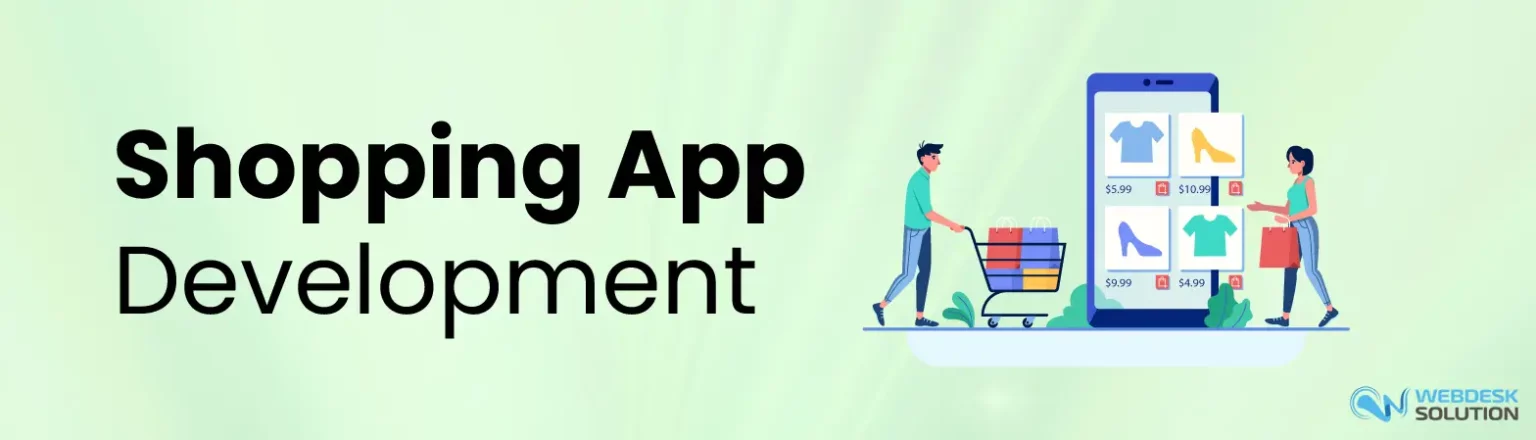
Shopping apps have transformed how we purchase small to big things. Shopping apps have been a go-to source for buying books, electronic gadgets, and hefty machinery. They have become popular because of their ease of use and user experience.
Moreover, many brick-and-mortar stores and big businesses are joining the eCommerce bandwagon by launching apps. If you are an entrepreneur or a business owner who wants to create a shopping app, you are in the right place.
As an eCommerce development company, we have developed shopping apps for all kinds of businesses worldwide. Therefore, this blog will provide a step-by-step process to create a shopping app that will engage, impress, and retain customers. Before we look into it, we will walk you through the current state of the shopping apps.
So, let’s get started.
The Future of Shopping Apps: Growth and Market Predictions
The demand for shopping apps continues to surge, with projections indicating significant growth in the coming years. Here are some future forecasts that highlight this trend:
- E-commerce Dominance: It’s estimated that by 2040, 95% of all purchases will be facilitated through online stores.
- Mobile Commerce Expansion: The global mobile commerce market is projected to grow from $7.83 billion in 2026 to $37.40 billion by 2034, exhibiting a compound annual growth rate (CAGR) of 18.97% during this period.
- Social Commerce Growth: Global social commerce sales are forecasted to reach an impressive $8.5 trillion by 2030, reflecting the increasing influence of social media platforms on shopping behaviors.
These projections underscore the escalating importance of shopping apps in the future retail landscape. Now, let’s explore the benefits you can gain by developing a shopping app for your business.
What Are The Benefits You Get By Building a Shopping App?
Building a shopping app can offer many benefits to your business and your customers. In fact, you should create a shopping app even if you only have an offline store. Want to know why?
Here are some advantages you will get with a shopping app.
- Increased Customer Engagement and Loyalty: With a shopping app, your customers can easily browse products and make a purchase directly from their mobile phones without visiting your website or offline store. This can increase customer engagement with your brand and increase customer loyalty.
- Increased Sales: It can help you increase your sales with more precise marketing efforts to target new users. Also, the quick steps to search for a product and the add-to-cart option in the shopping app lead to more sales.
- Better Customer Experience: You can offer a more personalized experience for your customers through your shopping app, like personalized product recommendations and customized push notifications. You can even interact more with your customers and get reviews and feedback on the app.
- Competitive Advantage and Improved Brand Recognition: A shopping app for your store can offer you a competitive edge and help you differentiate yourself from competitors. Moreover, a shopping app offers a new touchpoint for your customers, who can remember your brand for future purchases.
- Direct Marketing Channel: Building a shopping app allows you to do direct marketing through push notifications, in-app messaging, email, and SMS. You can leverage these direct marketing channels to target and engage customers with personalized promotions, discounts, and product recommendations.
These benefits would have undoubtedly impressed you. So, without wasting much time, let’s jump on the steps to create a shopping app for your store.
Why Do Some Shopping Apps Fail?
While the benefits of launching a shopping app are clear, not every app becomes a customer favorite. In reality, many ecommerce apps are installed once and quickly forgotten or worse, deleted within days.
Understanding why some shopping apps fail can help you avoid costly mistakes and create an app that customers actually enjoy using.
Here are some of the most common reasons shopping apps struggle to succeed:
- Slow Loading Times: Mobile shoppers expect speed. If your app takes too long to load product pages, search results, or checkout screens, users will quickly lose patience. Even a few seconds of delay can lead to frustration and app abandonment.
- Clunky User Experience: An app that feels cluttered, confusing, or difficult to navigate can discourage users from exploring further. Shoppers want a smooth and intuitive journey from browsing products to completing a purchase.
- Unintuitive Design: If users have to guess where to find products, filters, or checkout options, they are unlikely to stick around. A well-designed shopping app should make every action, searching, browsing, and buying, simple and obvious.
- Steep Learning Curve: New users should be able to understand how the app works within seconds. A complicated onboarding process or hidden features can make people give up before they even start shopping.
- Lack of Personalization: Modern shoppers expect personalized experiences. Apps that fail to recommend relevant products, remember preferences, or offer tailored suggestions miss a valuable opportunity to increase engagement and sales.
- Technical Glitches and Bugs: Frequent crashes, broken links, login errors, or buggy features can instantly damage user trust. Stability and reliability are essential for maintaining a positive reputation.
- Limited Payment or Shipping Options: Customers prefer flexibility when it comes to payments and delivery. If your app doesn’t support popular payment methods or convenient shipping options, users may abandon their carts and turn to competitors.
- Missing Essential Features: Features such as product reviews, wish lists, order tracking, and secure checkout have become standard expectations in modern ecommerce apps. Without them, your app may feel incomplete and less trustworthy.
- Poor Performance Optimization: Apps that consume too much storage, battery, or mobile data often get removed quickly. Optimizing your shopping app for performance ensures a smooth experience across different devices and network conditions.
Avoiding these common pitfalls is crucial when building a shopping app in 2026. By focusing on performance, usability, and customer expectations, businesses can create an app that keeps users engaged and coming back for more.
9 Crucial Steps to Create a Shopping App
Creating a shopping app for your online store can seem daunting, but with the right approach, you can do it with ease. Let’s break down the process into 9 simple steps to help you get started.
1. Conduct Market Research and Define Target Audience

The first and most important step in building a shopping app is conducting proper market research and identifying your target audience. To define the right audience for your shopping app, you need to understand the demographics, behaviors, and preferences of potential users. This helps you create an app that aligns with real customer needs and expectations.
To better understand your target users, consider analyzing factors such as:
- Demographics: Age group, location, income level, and occupation of your potential customers.
- Shopping behavior: How often users shop online, what devices they prefer, and how they browse products.
- Customer preferences: Payment methods, delivery expectations, and the types of products they are most interested in.
Apart from understanding your audience, you should also conduct research on your competitors and the latest eCommerce market trends. Studying successful shopping apps can help you identify what works well in the market and what customers expect from modern mobile shopping experiences.
When analyzing the market, pay attention to aspects such as:
Features offered by competitors
User experience and app design
Pricing strategies and promotions
Customer reviews and feedback
Another important part of this research is understanding the type of shopping app you want to build. Generally, shopping apps fall into two common categories:
- Marketplace Apps: These platforms bring multiple sellers together in one app, allowing users to browse products from various vendors. This model offers a wide product selection and allows customers to compare prices easily.
- Individual Store Apps: These apps are designed for a single brand or retailer. They allow businesses to offer a personalized shopping experience, exclusive deals, and stronger brand engagement.
In addition, it is helpful to identify the business model your shopping app will follow. The most common models include:
- Business-to-Business (B2B): Businesses sell products or services to other businesses, often in bulk or wholesale quantities.
- Business-to-Consumer (B2C): Companies sell products directly to individual consumers through their app.
- Direct-to-Consumer (D2C): Brands sell directly to customers without intermediaries, often through their own dedicated app.
- Consumer-to-Consumer (C2C): Individuals buy and sell products directly with each other through the platform.
However, the level of research required depends on your current business stage. If you already have a shopping website and want to launch a mobile app, you may only need to focus on mobile usage trends and customer behavior on apps. But if you are starting a new online shopping business, conducting detailed market research is essential to understand the competitive landscape and position your app effectively.
2. Choose a Suitable Platform & Development Approach

After knowing your target audience, the next crucial step is to define whether you want to develop an app for Android, iOS, or both.
There’s no doubt that Android technology is dominating the global market share, with more than 70% of smartphone users having an Android device. So, you would want to build an Android shopping app. But it’s equally true that iOS technology covers most of the market share in North America (almost 54%). And if your target location is America, you should build an app for both Android and iOS.
Apart from the platform, you also need to define the development approach for your shopping app. You have two options.
Native App Development:
In native app development, the developer creates an app that runs on a specific platform, such as Android or iOS, from scratch. That means, in the native shopping app development approach, if you want to build an app for Android and iOS, you’ll need to develop two distinct apps for each OS.
Native app development can be costly and may require more time, but it gives you more freedom to customize your shopping app and add more advanced features per your business requirements.
Cross-Platform App Development:
Here, developers create apps that run on multiple platforms like Android and iOS by using cross-platform app frameworks like React Native, Flutter, etc. That means you can use the same code for both OS apps by using cross-platform frameworks. This approach requires less time and cost but also has some limitations on the customization part.
If you don’t have any issues with the budget and want to create a high-performing shopping app for a specific platform, go with Native app development.
If you have a limited budget and want to reach a broader audience on multiple platforms, go with cross-platform app development.
3. Define the Key Features of the Shopping App

Here is a list of essential features you should include in your shopping app.
- Sign Up: Keep the sign-up process effective by allowing users to sign up via email and phone number. To provide more convenience, you can allow users to Sign Up via third-party platforms, such as Google and Facebook.
- Quick Search: It is one of the most crucial features in your eCommerce app. Users can discover their required product quickly if you have integrated a helpful search feature in your eCommerce app. It will ultimately increase user engagement.
- Detailed Product Catalog: A highly-organized product catalog is crucial in any eCommerce app. It displays product features, images, descriptions, height, weight, and ratings.
- Add to Wishlist: A wishlist feature allows users to add their desired products to their wishlist for purchase in the near future.
- Simple Checkout Process: After spending significant time choosing a product, the user is looking for a quick checkout process that asks for minimal details. If the checkout process asks users to re-enter information or involves too many steps, they will likely abandon their cart. To avoid this, it’s recommended to implement a one-step checkout process and follow proven eCommerce checkout page best practices that enhance user experience and reduce friction.
You can also allow guest checkout for the users who use your shopping app for the first time.
- Multiple Payment: If you want your app to give tough competition to other shopping apps in the market, it is essential to satisfy users’ needs. In this digital age, the consumer gets various options when making payments online. It would help if you integrated multiple payment options in your shopping app, or you might lose your consumers.
- Order Tracking: All the customers love to check where their order has been reached after purchasing the product. Hence, you should include an order tracking feature that allows users to track the order from order placement to delivery.
- Push Notification: One of the most fundamental modes of communication you use with consumers is push notification. This feature lets you notify users about their orders, product recommendations, upcoming discounts and offers, and payment reminders.
- Customer Support: By providing live chat, email support, or in-app support, you can resolve all the critical issues that users have with the product. It helps to offer a better experience to users and increase engagement. Incorporating advanced AI chatbots in eCommerce not only streamlines customer service but also ensures 24/7 assistance, improving user satisfaction and boosting engagement.
- Shipping System: A proper shipping system is necessary to offer seamless product shipping to your customers. If the product is not shipped on time or the shipping cost is very high, it can reduce your customer base and sales. So, while brainstorming about creating a shopping app, also think about providing a better shipping system.
You can also enhance your shopping app by integrating some advanced features that improve user engagement and provide a more personalized shopping experience.
- Product Recommendations: By implementing technologies like Artificial Intelligence (AI), you can analyze user behavior, browsing history, and purchase patterns to recommend relevant products. Personalized recommendations help users discover products faster and increase the chances of repeat purchases.
- AR/VR Integration: Augmented Reality (AR) and Virtual Reality (VR) are transforming online shopping experiences. These technologies allow users to virtually try products such as clothes, accessories, makeup, or even furniture before purchasing. It creates an experience similar to shopping in a physical store.
- iBeacon Technology: iBeacon is a small device that enhances the use of the Internet of Things (IoT) in retail environments. With this technology, stores can gather insights about customers’ shopping preferences and send personalized offers, discounts, and promotions directly through the shopping app.
- Location Tracking: Location tracking helps users find nearby stores or pickup points. It can also assist customers in tracking their parcels once the order has been dispatched from the warehouse.
- Loyalty Programs: Loyalty programs encourage customers to continue shopping with your brand. Users can earn reward points on purchases and redeem them for discounts, special offers, or exclusive deals.
- Barcode Scanning: This feature allows users to scan a product barcode in a physical store and instantly access detailed product information, reviews, or alternative options within the app.
- Analytics: Analytics tools help businesses understand customer behavior, track engagement, and measure sales performance. These insights allow companies to improve their marketing strategies and optimize the overall shopping experience.
- Cart Recovery: Users may abandon their cart for various reasons such as connectivity issues or distractions. A cart recovery feature ensures that users can return later and continue their purchase without losing the products they selected.
4. Create a Wireframe & App Design

After deciding on all the essential features of your shopping app, it’s time to create a wireframe for the app. It is generally a rough architecture of the future application in two-dimension.
In simple words, it allows you to check the overflow of the application from start to finish.
After creating a wireframe properly, it is time for app design. To create wireframe & app design, you should hire a mobile app design company. They follow the latest app design trends and platform-specific guidelines to create a shopping app design that displays products correctly & offers a top-notch user experience.
5. Choose a Suitable Tech Stack

The next crucial step in creating a shopping app is selecting a reliable technology stack. A technology stack refers to the combination of tools, programming languages, frameworks, and services used to build and run a mobile application. It typically includes frontend technologies, backend frameworks, databases, APIs, and cloud infrastructure that work together to ensure the app functions smoothly.
Choosing the right tech stack plays a major role in determining the performance, scalability, and security of your shopping app. Businesses usually evaluate whether to build the app using native technologies for iOS and Android or adopt cross-platform frameworks such as Flutter or React Native to reduce development time and cost.
A typical shopping app tech stack may include frontend technologies like Swift, Kotlin, Flutter, or React Native; backend frameworks such as Node.js, Python, or Java; databases like MongoDB or PostgreSQL; APIs for payments, authentication, and third-party integrations; and cloud platforms such as AWS, Firebase, or Google Cloud.
The final selection depends on factors such as your business goals, expected user traffic, required features, and long-term scalability.
By choosing the right technology stack early in the development process, businesses can ensure that their shopping app remains fast, secure, and capable of handling future growth.
6. Develop Your Shopping App
Now, it’s time to develop your shopping app. For the same, you should hire an eCommerce app development company.
The company first creates the front end of your ecommerce app. They make sure to consider the latest frontend development trends and leverage popular frontend frameworks to create an app’s user interface.
Apart from the front end, the company also builds the back end. They create the database, APIs, and server-side code in the backend.

Do you know how WebDesk Solution can helpyou create a shopping app with an elegant UIfrom start to finish?I Want To Know
7. Conduct App Testing
After building an app, it’s time to test your shopping app thoroughly. The development team runs various quality assurance tests to identify any bugs and issues in the shopping app. The QA team forwards the same to the development team. The developers resolve the bugs as quickly as possible.
8. Launch Your App to the Relevant App Store
After developing your app, it’s time to launch it on the specific store. The development company has expertise in launching the app for multiple stores. Hence, they help you launch your app on the relevant app store without hindrance.
9. Conduct Effective App Marketing

Your work is not over as soon as you launch your shopping app. The actual work starts after that. You need to market your shopping app to make it successful effectively. For the same, you need to carry out different marketing types to reach a wider audience.
The best way to promote your shopping app is to contact a digital marketing agency. They would understand your business goals, make a modern app marketing strategy and follow it well to market your app successfully.
How Much Does it Cost to Develop a Shopping App?
The cost to develop a shopping app starts from $30,000 and goes up to $1,50,000 or more. It includes all the things right from planning to development and launch.
The cost varies based on many factors like the complexity, total number of features & functionalities, development company location & experience, platform, development approach, and more.

Want to know the Exact Cost of Shopping App Development?
Talk to our app development consultant and find out how much it costs to build your mobile shopping app!
Get A QuoteWhat Are the Different Monetization Strategies for Shopping Apps?
Once you build your shopping app, the next big question is how you can turn it into a reliable revenue generator. Fortunately, shopping apps offer several monetization opportunities beyond simply selling products.
Here are some common monetization models you can consider:
- In-App Advertising: You can display banner ads, sponsored listings, or promotional placements from third-party businesses within your app. As users browse products, these advertisements generate revenue whenever they are viewed or clicked.
- Direct Product Sales: This is the most traditional monetization approach. Whenever a customer purchases a product through your app, your business earns revenue directly from the sale. Providing a seamless and enjoyable shopping experience can significantly increase your conversion rates.
- Subscription-Based Services: You can offer premium features, exclusive deals, or early access to new products through monthly or annual subscription plans. This model helps create predictable recurring revenue while providing additional value to loyal customers.
- Transaction Commission: If your app operates as a marketplace where multiple vendors can sell products, you can charge a commission on each successful transaction. This model is widely used by large ecommerce platforms and allows your revenue to grow alongside seller activity.
Businesses often combine multiple monetization strategies to maximize their revenue potential while maintaining a great user experience.
Best Shopping Apps in 2026 For Your Inspiration
Now, let’s check out some of the best shopping apps in 2026 that you can draw inspiration from to create your own successful shopping app.
1. Nike

Nike is a great example of a successful shopping app with unique features. This app offers personalized recommendations and exclusive access to limited-edition products. Moreover, if you are shopping from an offline store, the app allows you to scan the product barcode to get detailed information. This app can be a great source of inspiration for creating your shopping experience.
2. Adidas
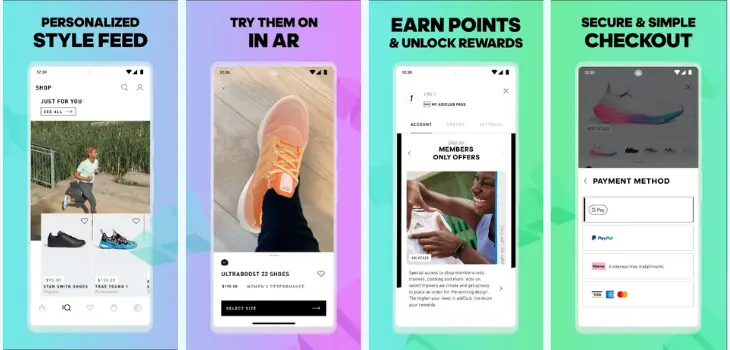
Adidas is another excellent shopping app example that has many unique features. It allows you to find products through visual search, shows real-time stock availability, and offers the ability to customize and personalize certain products. This app is a great example of how to offer an engaging user experience.
3. ASOS

ASOS is a shopping application that offers a wide range of products from various brands. It has a very friendly user interface and features like visual search and personalized product recommendations. It also has shareable boards to help you share the product and a fit assistant feature to get the right size the first time.
4. H&M

H&M is another best shopping app that can inspire you on how to create one for you. It offers personalized recommendations, product finding through smart search and filtering options, the ability to create and save outfit combinations, and a virtual try-on feature. The app also has a Scan & Find feature that allows you to scan a price tag to get more details if you shop offline.
5. ZALORA

ZALORA is an Asian shopping app that offers a wide range of products from different brands. It has the feature of a loyalty program that rewards users for purchases. A live chat feature allows customers to contact a support team for assistance. Other features include smart search and filtering options, Visual search, push notifications, and magazine integration for the latest fashion trends.
Wrapping Up
We hope you have become familiar with the process of shopping app development. It’s time to start planning for your shopping app. As of now, there are many shopping apps in the market. Therefore, you should consider the target audience, key features, and budget.
WebDesk Solution is a leading mobile app development company. We possess an excellent team of mobile app developers who have developed some of the best shopping apps for businesses worldwide. Hence, they can understand your needs well and provide you with a shopping app solution.
Frequently Asked Questions
The features of your shopping app will depend on your target audience and business goals. Some of the features you should include are product catalogs and search functionality, secure payment options, wishlists, push notifications, ratings and reviews, personalized recommendations, and social media integration.
The time it takes to develop a shopping app depends on the complexity of the app and the resources available for development. On average, it can take anywhere from several months to a year or more to develop a shopping app.
Ensuring the security of your shopping app is critical for protecting your customers’ personal and financial information. Some steps you can follow to secure your shopping app are using secure server infrastructure, secure payment systems, regular security audits, regular security patch updates and bug fixes, and robust user authentication.
A shopping app typically requires a user interface for browsing and selecting products, a secure payment gateway for transactions, a database to store product information and user data, and integration with shipping and delivery services for order fulfillment. Additionally, features such as user accounts, customer support, and personalized recommendations can enhance the user experience.
To make your Shopping app successful, you need to provide a seamless and intuitive user experience, offer a wide variety of high-quality products, secure and easy payment options, fast and reliable shipping and delivery services, and excellent customer support.
Building a shopping app typically requires a team of 6–10 professionals, depending on the app’s complexity and features. A typical team includes a project manager, a UI/UX designer, mobile developers, a backend developer, and a QA engineer. If the app includes advanced features such as AI recommendations or AR/VR integrations, additional specialists may also be required.

Related Posts