

Google Shopping Ads Management Built by an eCommerce-Native, Google Certified Partner
A Google Partner-certified agency managing Standard Shopping, Performance Max, and Demand Gen for ecommerce brands on Shopify, BigCommerce, Adobe Commerce, and Shift4Shop.

A Google Shopping Ads management agency manages the strategy, setup, optimization, and ongoing performance of Google Shopping campaigns, including product feed management, conversion tracking, bidding, audience targeting, and campaign optimization across Standard Shopping, Performance Max, and Demand Gen. WebDesk Solution approaches Google Shopping management with three core principles: every engagement begins with a feed audit before bid optimization, conversion tracking is treated as an ongoing discipline rather than a one-time setup, and every account is managed by a senior PPC strategist from day one. As a Google Partner-certified team with 14+ years of eCommerce experience, we have delivered results such as increasing Code1Supply’s Shopping ROAS from 2.36× to 5× within 90 days. WebDesk Solution holds active Google Partner certification — a designation awarded to agencies that meet Google’s standards for advertising spend management, team certifications, and demonstrated client performance. Combined with 14+ years of eCommerce experience and more than 500 client engagements across major commerce platforms, that certification reflects both platform expertise and operational experience.
From our New York and Toronto offices, we work directly with eCommerce brands to transform Google Shopping into a scalable acquisition channel. Our team manages feed quality, campaign structure, product segmentation, performance optimization, and reporting with a focus on sustainable revenue growth rather than short-term metric improvements.
PROOF
Trusted by 500+ Brands Across North America
WebDesk Solution is an officially recognized Google Partner, verified for our work in Shopping Ads, Search Ads, and Performance Max. Our team maintains current Skillshop credentials and has held continuous Google Ads certification across more than a decade of ecommerce campaign work.








 4.9 ★
4.9 ★ 4.9 ★
4.9 ★ Top-ranked
 Recommended
 Partner Certified
14+ years. 500+ clients. Two offices across North America. The kind of track record you cannot manufacture in a pitch deck.
Why Businesses Need Professional Google Shopping Ads Management
Across 500+ ecommerce engagements, we’ve watched Shopping Ads evolve from a feed-and-budget channel into something that demands real operational discipline. Below are four patterns we see in nearly every brand that comes to us looking for help – and the reasons we believe specialist management has become essential rather than optional.
The technical depth has outpaced what most in-house teams have time to build
When we audit accounts run by capable in-house marketers, the campaigns themselves usually look fine. What’s missing is the second layer of operational discipline – Google Product Category mapping, custom-label hierarchies, supplemental feeds for edge-case SKUs, server-side conversion tagging. The teams know these exist; they just don’t have 20 hours a week to maintain them while running everything else.
Performance Max success now depends on how it’s been set up, not how long it’s been running
In the past two years, we’ve seen Performance Max go from a campaign type brands could activate and ignore to one that performs almost entirely on the quality of its inputs. Asset group structure, audience signals, search themes, exclusion rules – these decisions made on day one determine whether PMax earns its budget six months later. We’ve inherited accounts where simply restructuring PMax recovered 30–40% of effective budget capacity.
Product feeds have become the single biggest performance lever
Of the 500+ engagements we’ve run, the bottleneck has shifted to the feed in a clear majority. Title structure, GTIN coverage, image quality, brand fields, color and size variant completeness – when these aren’t right, no bid strategy can recover the lost impression eligibility. We’ve moved feed work to Phase 2 of our methodology specifically because of how consistently it’s the foundation everything else builds on.
In-house operational load crowds out higher-leverage work
The pattern we see most often: a strong in-house PPC manager joined the team for growth strategy, then ended up consumed by Merchant Center diagnostics, weekly negative-keyword review, and feed-attribute hygiene. When we take on the operational layer, that internal person typically gets 60–70% of their week back to focus on merchandising, margin work, and the cross-channel coordination that only an internal team can do.
Why Most Google Shopping Ads Campaigns Underperform
Across the audits we’ve run, the same four issues show up over and over – across catalog sizes, across industries, across spend tiers. They sit below the surface of the default Google Ads dashboard, which is why brands miss them until performance breaks down.
Product feed gaps that limit reach
In roughly 7 of every 10 audits we run, we find 10–20% of the catalog underperforming because of feed gaps alone – missing identifiers, inconsistent title patterns, incomplete brand or color attributes. The campaigns are usually fine. The feed is what’s holding the account back, and most teams haven’t done a feed audit since initial setup.
Performance Max spending on the wrong queries
Across our 500+ engagements, Performance Max accounts inherited from prior management are the most common turnaround case. The pattern is consistent: single asset group, no audience signals, no search-theme guidance, conversion data the algorithm doesn’t trust. Once we rebuild the inputs, the same budget tends to produce 25–40% better ROAS within 60 days.
Merchant Center disapprovals working in the background
Roughly 1 in 5 accounts we audit are running with 10% or more of their catalog silently disapproved the Merchant Center. The Google Ads dashboard doesn’t surface this – it’s only visible if someone is checking the diagnostics panel weekly. For a 5,000-SKU catalog, a 15% disapproval rate means 750 products are invisible to buyers every day.
Conversion tracking that needs validation
In about 4 of every 5 accounts we audit, conversion tracking was correct at some point and has not been validated since. Duplicate events firing across GA4 and Google Ads, server-side tags that were never tested end-to-end, attribution windows that don’t match the actual sales cycle. Cleaning this up is almost always the first improvement we make, because target ROAS bidding only works when the data underneath it is real.
Sound familiar?
Our ROI-Focused Google Shopping Ads Management Services
We offer eight services that together cover everything your Shopping Ads need to perform – from feed optimization to attribution. Each service is delivered by a senior strategist and tied to the metrics your team tracks: ROAS, CPA, impression share, and revenue.

Google Shopping Campaign Setup & Optimization
We build Standard Shopping campaigns structured around your catalog. Custom labels separate your best-performing products from longer-tail inventory, and priority tiers route queries to the campaigns most likely to convert them profitably. Whether you’re starting fresh or restructuring an existing account, we focus on building campaigns that scale with your business.

Performance Max Campaign Management
Performance Max gets the best results when the setup is deliberate. We build asset groups around products that share buyer intent, add first-party audience signals from your customer data, and use search themes to guide the algorithm toward queries that fit your highest-margin categories.

Demand Gen Campaign Management
Demand Gen helps you reach buyers earlier in the journey, on YouTube, Discover, and Gmail. We design Demand Gen campaigns for new-customer acquisition and rotate creative regularly to keep performance fresh – then track contributions back to conversion alongside your Shopping campaigns.

Google Merchant Center Setup & Management
We handle the full Merchant Center setup – domain verification, tax and shipping configuration, and feed submission. Once your account is live, we monitor diagnostics daily and resolve any disapprovals or policy issues as they come up, so your products stay eligible to appear in Shopping results.

Product Feed Optimization
Our feed work covers titles, image quality, GTIN and MPN validation, brand and color attribute completion, custom labels, and supplemental feeds. We work with the feed-management platform best suited to your ecommerce setup – whether that’s a third-party feed tool, your platform’s native feed connector, or a custom integration – to apply feed rules at scale without altering your underlying product data.

Bid Strategy & Budget Allocation
Target ROAS calibrated for each product tier instead of one flat target across the account. Bid modifiers tuned to your historical performance by device, daypart, and geography. Budget reallocated weekly based on what’s working – not held static against monthly plans that no longer match account reality.

Conversion Tracking & GA4 Integration
This is the foundation that everything else builds on. We verify your GA4 setup, link it cleanly to Google Ads, deploy server-side tagging where needed, and resolve any duplicate-event conflicts. With clean tracking in place, every bid decision downstream gets the accurate data it depends on.
Performance Reporting & Optimization Cadence
Your account gets a monthly performance review meeting, a weekly written update, and real-time dashboard access with ROAS, CPA, CTR, and impression share visible by campaign and product category. You see what we see – no surprises, no waiting for a quarterly report.
Not sure which services your account needs?
Our Step-by-Step Methodology for Google Shopping Ads Management Success
Every engagement we run follows the same four-phase methodology – refined across more than a decade of ecommerce work and applied to both new accounts launching from scratch and existing accounts that need optimization, restructuring, or scale. The sequence stays the same; the specific work changes based on where your account is starting from.
Phase 1 – Conversion Tracking Foundation
Tracking comes first, regardless of whether we’re inheriting an account or building one from scratch. The work just looks different in each scenario.
Phase 2 – Google Merchant Center & Product Feed
With tracking solid, we move to the product feed and Merchant Center setup. This is where feed quality determines the ceiling of what’s possible in the account.
Phase 3 – Campaign Architecture
Once tracking and feed are solid, we move to campaign structure. Standard Shopping for branded and high-intent queries, Performance Max for prospecting at scale, Demand Gen for visual-first discovery.
Phase 4 – Bid Strategy & Continuous Optimization
With the foundation in place, bid strategy becomes the lever we work week by week.
How WebDesk Follows Best Practices for Google Shopping Management
These six rules govern how our team works on every account. They’re not suggestions or aspirations – they’re non-negotiables built into our process, the result of seeing what happens when corners get cut on each one. These rules apply to every account we manage, regardless of size or industry.
No bid adjustments until conversion tracking is verified end-to-end
Target ROAS bidding only works against accurate conversion data. If that data is wrong, the algorithm optimizes against noise. Every conversion event, attribution window, and GA4 link gets validated before any bid decision moves forward – including on emergency turnarounds.
Campaign optimization waits until the feed clears our internal feed-health check
Bid strategy cannot compensate for a broken feed. Every engagement begins with a feed audit against an internal checklist – identifier coverage, title-rule consistency, image quality, attribute completeness, disapproval count. Campaign-level work waits until the feed passes that check, even when the client is eager to start optimizing immediately.
Flat target ROAS doesn’t ship on mixed-margin catalogs
Setting one target ROAS across an entire mixed-margin catalog quietly subsidizes low-margin SKUs at the expense of high-margin ones. Before any tROAS strategy launches, margin data gets pulled per product tier and separate target values get configured. A 40%-margin product and a 12%-margin product cannot share the same bid signal.
Negative-keyword lists get reviewed every 7 days, without exception
Search-term reports change weekly. Negative keyword work is the highest-leverage maintenance task in PPC, and the moment it slips into bi-weekly or monthly review, wasted spend compounds. Every account on our roster has a calendar block for weekly negative review – no skipping during launch weeks, holiday rushes, or vacation coverage.
Every account change carries a date, a reason, and an expected outcome
Account changes get logged with a strategist initial, a stated reason, and an expected outcome. If a campaign was paused six months ago, the documentation can tell you who paused it, why, and what they expected to happen. The discipline costs maybe 10 seconds per change – and saves hours when performance shifts and a root cause needs tracing.
Every A/B test launches with a hypothesis and a measurable outcome
“We tried it and it didn’t work” is not an acceptable test result on a WebDesk account. Tests start with a written hypothesis (“Bid adjustment X is expected to lift conversion rate by Y%”) and a defined success threshold. When tests fail, the team knows why; when they win, the pattern gets replicated across other accounts.
What a Google Shopping Expert Checks When Performance Breaks
When a Shopping account loses performance, our team checks six areas in order. Below is the breakdown – including how often we find each issue in audits and what we typically see once it’s fixed.
1. Incomplete product feeds – missing GTINs, MPNs, brands, color/size variants, Google Product Category
Found in roughly 7 of 10 audits. Products without GTINs are typically excluded from 30–50% of relevant buyer queries. When we complete missing attributes and rebuild title rules, impression volume usually lifts 40–80% within the first two weeks – before any bid change runs. This is why feed work always comes first.
40–80% impression lift2. Unstable Merchant Center setup – unresolved disapprovals, expiring tax/shipping settings, weak product identifiers
Found in roughly 1 in 5 audits. The pattern: 10–20% of catalog items silently disapproved with no internal alert system catching it. Tax and shipping settings expire on rolling schedules that most teams forget about. We pull a fresh feed inspection report on every audit, because Merchant Center diagnostics surface issues that Google Ads reporting never shows.
3. Blended campaign structure – all products lumped into one campaign, no segmentation by margin or intent
Found in roughly 6 of 10 accounts inherited from prior teams. The cost: hero SKUs and slow movers compete for the same budget, so top performers lose impression share to products that should never have shared their campaign. Restructuring into tiered campaigns typically recovers 25–40% of effective budget capacity in the first 30 days.
25–40% budget recovery4. Bidding without profit signals – bids set against revenue, not margin
Found in roughly 8 of 10 accounts. The Google Ads default – flat target ROAS across the account – works against mixed-margin catalogs. Once we pull margin data from your back-end systems and set tier-specific tROAS values, the same ad spend typically lifts gross profit 15–30% even when revenue stays flat. This is the lever finance teams notice immediately.
15–30% gross profit lift5. Surface-level reporting – dashboards that show clicks and impressions but no profitability or impression-share by competitor
Default Google Ads reporting stops at the metrics that flatter the channel – clicks, impressions, conversion count. We extend reporting to impression share lost to budget vs rank, Auction Insights segmented by competitor, and profitability mapped against true margin. The metrics that drive decisions are usually two layers past the default dashboard.
6. Landing page mismatches – ad clicks landing on out-of-stock products or pages without buyer-matching copy/imagery
Found in roughly 1 in 3 audits. Out-of-stock products driving paid clicks waste budget at the moment of highest cost. Landing pages with weak hero imagery or copy that doesn’t match ad intent typically convert at 30–50% below the account’s average. We monitor landing-page status against active ad inventory continuously, not just during launch QA.
Recognize 3 or more of these in your account? Get in touch – we can show you exactly where the opportunities are.
How We Helped Code1Supply Reach a 5× ROAS in 90 Days
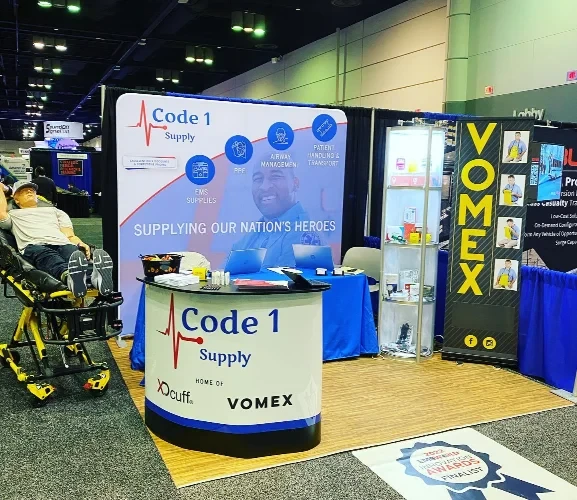
Code1Supply is a US-based medical supply ecommerce brand running on the Shift4Shop platform. When they came to us, their Shopping campaigns were underperforming and the data underneath the account wasn’t consistent enough to diagnose without a full audit.
We applied our four-phase methodology over a 90-day engagement. The work covered four areas: conversion tracking validation across GA4 and Google Ads, full product feed cleanup including missing identifiers and disapproval resolution, account restructuring into tiered Standard Shopping and Performance Max campaigns segmented by shipping weight and price band, and bid strategy calibration with target ROAS per tier and weekly optimization cadence. Within those 90 days, Shopping ROAS moved from 2.36× to 5×, conversion rate grew from 4.29% to 6.19%, and revenue from the Shopping channel increased 271% in the first 60 days. New-user acquisition from paid Shopping campaigns grew by 479%.
Industries We Serve
Shopping Ads strategy looks different across product categories. The structure that converts well for a fashion brand will look very different from what works for a jewelry retailer, a medical supply ecommerce store, or a B2B industrial supplier. We work across eight ecommerce verticals and adapt our methodology to fit each one.
Fashion & Apparel
Fashion catalogs win on visual quality and variant completeness – color, size, fit, season. We enforce strict feed image standards, build out complete variant coverage across SKUs, and apply seasonal custom labels so collection rotations don’t strand budget in campaigns built for the previous season. Standard Shopping for branded queries plus Performance Max for category discovery is the structure that typically performs best.
Jewelry & Luxury
High-AOV jewelry and luxury catalogs require margin-aware bidding more than any other vertical. With AOVs in the hundreds or thousands, even small ROAS shifts move significant gross profit. We segment by price band and metal type, build out lifestyle imagery in Performance Max asset groups, and configure conversion tracking that respects longer consideration windows typical to luxury purchase decisions.
Health, Beauty & Wellness
Beauty and wellness ecommerce sits in regulated territory – Google’s Shopping policies around supplements, cosmetics claims, and health-adjacent products require continuous monitoring. We navigate category restrictions, document eligibility decisions per SKU, and structure campaigns to maintain compliance across regulated product groups while still driving growth in the compliant ones.
Medical Supplies & Healthcare Products
Medical supply ecommerce requires strict Merchant Center compliance, accurate product data, and tracking that supports both consumer and healthcare procurement purchases. Our proven process helped Code1Supply improve ROAS from 2.36× to 5× in just 90 days, making this one of our strongest Google Shopping Ads verticals.
Sports & Fitness Equipment
Sports and fitness catalogs combine consumer behavior with technical product attributes – bike component compatibility, treadmill specifications, supplement ingredient lists. We build feed rules that surface those attributes correctly, segment by buyer intent (beginner vs. enthusiast vs. pro), and configure Performance Max audience signals to keep prospecting aligned to the right buyer tier.
Pet & Animal Care
Pet ecommerce blends recurring-purchase behavior (food, treats, consumables) with one-time purchases (toys, beds, equipment). We separate these into different campaign types – Standard Shopping for repeat-purchase SKUs where buyer intent is high, Performance Max for discovery and new-customer acquisition – and configure attribution that captures the full lifetime value of pet-category buyers.
Home & Lifestyle
Home goods, furniture, decor, and lifestyle catalogs typically run higher AOV with longer consideration windows than typical DTC. We configure conversion tracking that respects multi-session buyer journeys, build Performance Max asset groups around room types or design styles for stronger audience matching, and use Demand Gen on visual platforms where home buyers research before they purchase.
B2B Industrial & Equipment
B2B industrial Google Shopping campaigns require a different approach than consumer ecommerce. Buyers use highly specific, high-intent searches, have longer sales cycles, and often convert through lead forms instead of direct purchases. We structure campaigns around technical search intent, accurate tracking, and qualified lead generation for industrial manufacturers, equipment suppliers, and specialty B2B businesses.
Don’t see your exact vertical? We’ve worked across multi-vendor marketplaces, subscription ecommerce, firearms and outdoor, and other product categories – get in touch and we can map our methodology to your specific catalog.
Why Choose WebDesk for Your Google Shopping Ads
Six reasons brands choose WebDesk, each grounded in a verifiable credential or operational practice.

Google Partner Certified – verified and currently active
Our Google Partner status is active and verifiable directly through Google’s partner directory. Our team maintains Skillshop credentials on a rolling basis, with certifications renewed as Google updates its requirements. The badge on this page links to our live Partner profile.

14+ Years and 500+ eCommerce Engagements
We’re an ecommerce-native team – 14+ years of building, scaling, and optimizing online stores across Shopify, BigCommerce, Adobe Commerce, and Shift4Shop. That platform-side experience shapes how we read your catalog, your fulfillment economics, and your margin structure.

Senior Strategists On Every Account
Every WebDesk Shopping account is run by a senior strategist with 7+ years of Google Ads experience. The strategist who scopes your engagement is the same person who manages your account – no handoff to a junior account manager after sign-on.

Platform-Native Expertise
We hold certified partner status across Shopify Plus, BigCommerce, Adobe Commerce, and Shift4Shop. Feed integrations, app installations, server-side tagging, and conversion event setup happen natively at the platform level – not through generic intermediaries that can lose data fidelity along the way.

Conversion Tracking as a Core Discipline
Conversion tracking is the foundation of every Shopping bid decision. We run dedicated service pages for Shopify, BigCommerce, and Squarespace conversion tracking because we treat it as a core discipline. Many agencies subcontract this work – we handle it in-house.

Transparent, Regular Reporting
Monthly performance review meetings with your senior strategist. Weekly written updates covering spend pacing, top performers, top wasters, and recommended actions. Real-time dashboard access for ROAS, CPA, CTR, and impression share – visible by campaign, by product category, by audience segment.
Start with a Google Shopping Ads agency that knows ecommerce.
How WebDesk Drives Revenue Through Google Shopping Ads
Our methodology moves the metrics that matter to your finance team. Below are the five revenue levers we work on – including the specific mechanisms we use to move each one, and before/after data from real engagements where it’s available.
Revenue Per Click
Mechanism: custom-label segmentation in your product feed, applied through whichever feed-management platform fits your ecommerce setup. We tag each SKU with margin tier, conversion velocity, and inventory health, then build campaign structures that route budget toward the high-RPC tiers. Inside Performance Max, search themes guide the algorithm toward queries that match those tiers. The result is the same click volume producing more revenue, because each click is paid to land on a product engineered for the buyer behind the query.
ROAS
Mechanism: conversion-tracking validation first (server-side tagging via Google Tag Manager, GA4 event reconciliation, attribution-window calibration), then target ROAS bid strategy layered per product tier rather than at account level. Before/after example: Code1Supply moved from 2.36× ROAS to 5× ROAS in 90 days using this exact sequence. The order is what matters – running target ROAS against unverified data degrades performance instead of improving it, because the algorithm optimizes against the wrong signal.
Impression Share on Profitable Products
Mechanism: custom-label-driven campaign isolation. Top-performing SKUs lose impression share because their budget is pooled with slower-moving products in the same campaign. We tag winners with a “Tier 1” label, isolate them into dedicated campaigns with protected budgets, and apply tROAS targets aggressive enough to claim share against named competitors via Auction Insights data. Hero SKUs no longer compete for share against your tail catalog.
Cost Per Acquisition
Mechanism: weekly search-term review with shared negative keyword lists at the account level, plus inventory-aware feed rules that pause ads on out-of-stock products automatically through your feed-management platform. Before/after example: in the Code1Supply engagement, these two interventions alone brought cost per conversion down by 45% within the first 90 days. The work itself is unglamorous – search-term review takes 1–2 hours a week – but the impact compounds across every campaign in the account.
New Customer Acquisition
Mechanism: Performance Max audience signals built from your CRM data (customer match lists, in-market segments, custom audiences via uploaded purchase data), combined with Demand Gen prospecting on YouTube and Discover where buyers research before they search. Before/after example: Code1Supply’s new-user count from paid Shopping grew 479% as a result of this work. The audience signals do the targeting; the Demand Gen surface expands the reach into discovery contexts that pure Shopping campaigns don’t access.
WebDesk vs. a Typical Google Shopping Agency
Eight ways our approach differs from a typical Shopping Ads agency. These are the operational differences buyers raise with us most often when comparing options.
| Dimension | Typical Agency | WebDesk Solution | Why It Matters |
|---|---|---|---|
| Account ownership | Junior account manager handles day-to-day | Senior PPC strategist (7+ years) runs the account | Stronger decisions get made faster when an experienced strategist is the day-to-day operator |
| Feed expertise | Often subcontracted to a feed tool vendor | In-house feed expertise across multiple feed-management platforms, matched to each client’s catalog and ecommerce platform | Feed quality drives most of what’s possible in Shopping – and the right feed tool depends on your specific platform and catalog |
| Conversion tracking | Treated as a setup task, validated once | Treated as a core discipline, validated continuously | Bid decisions made against unverified tracking degrade over time |
| Performance Max approach | Set the budget, let the algorithm figure it out | Asset group structure, audience signals, search themes, and ongoing monitoring | PMax performs as well as the inputs it’s given |
| Reporting cadence | Monthly PDF export | Monthly review meeting + weekly written update + real-time dashboard | Reporting lag becomes decision lag |
| Platform expertise | One platform, generalist team | Certified across Shopify Plus, BigCommerce, Adobe Commerce, Shift4Shop | Platform-native expertise prevents data loss at integration boundaries |
| Contract terms | 12-month lock-in standard | Month-to-month after the initial engagement | An agency that retains clients on results doesn’t need to lock them in |
| Communication | Email-only, response in 24–48 hours | Direct strategist contact, response within the business day | Account questions deserve same-day answers |
Most brands who switch to us tell us they had outgrown the structure their previous agency was working within. The work wasn’t bad – the operating model around the work was the limit.

Who Will Run Your Account
Our PPC team scopes, manages, and optimizes every Shopping Ads engagement, bringing together certified Google Ads specialists, Shopping Ads strategists, and performance marketers. Backed by Google Ads certifications, Skillshop credentials, and Performance Max expertise, our team has successfully delivered measurable growth for clients across eCommerce, retail, medical supplies, B2B industrial sectors, and multi-vendor marketplaces.
Our experience spans 50+ Shopping Ads engagements, managing substantial advertising budgets and delivering results such as the 5× ROAS achieved for Code1Supply.
FAQ’s


