

Overview
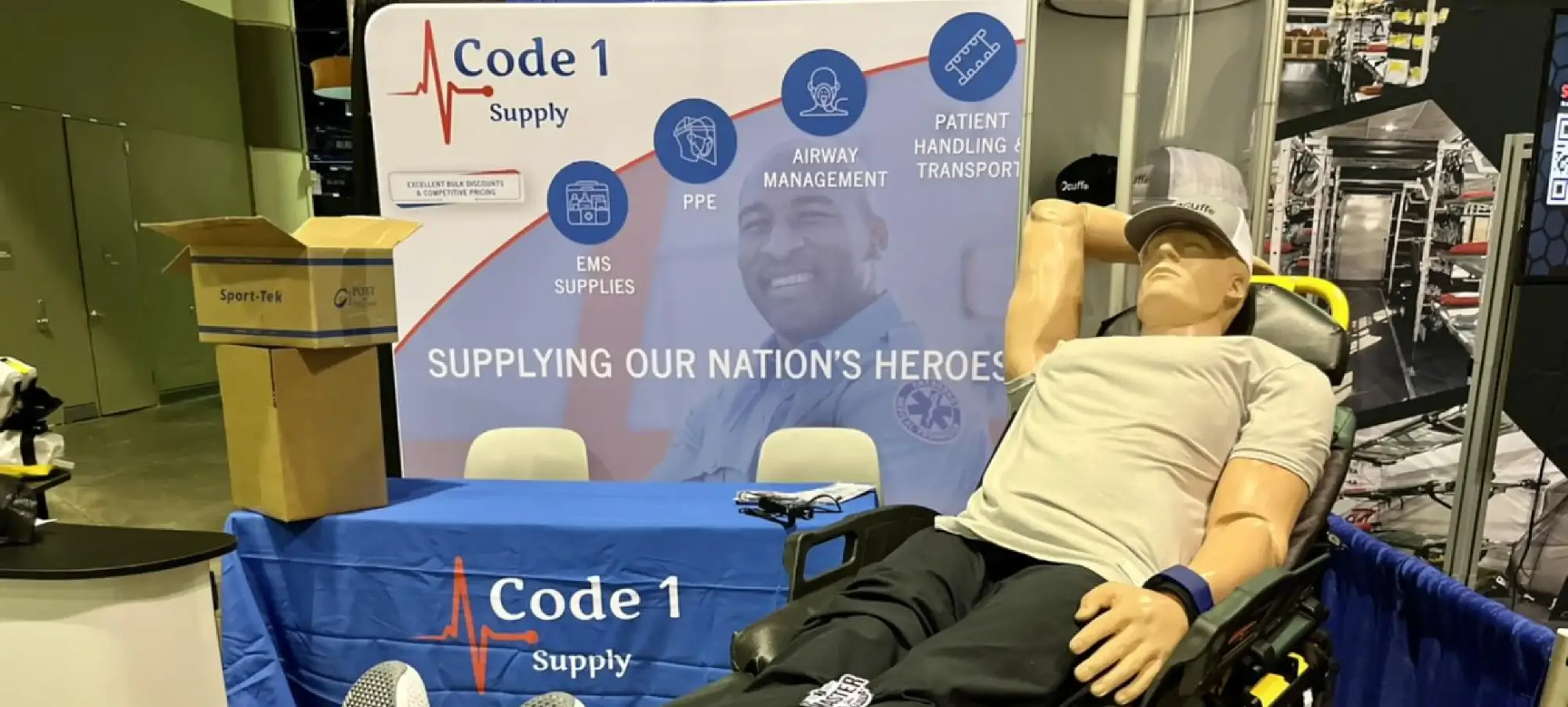
In mid-2024, Code1Supply—a specialized supplier of Covid-19 testing kits, emergency medical equipment, and first-aid essentials—found itself at a crossroads. Founded in 2014 and based in South Yarmouth, Massachusetts, this lean team of EMTs, paramedics, and nurses had built a reputation on quality, reliability, and competitive pricing. Yet despite their sterling track record, Code1Supply’s online growth was throttled by a Google Shopping Ads strategy that consistently underdelivered. With a small headcount of 1–10 employees, the company relied on each paid ad click to drive meaningful revenue—especially crucial since margins in the medical supply space are razor-thin. Their existing campaigns suffered from inaccurate conversion tracking, butchered product feeds, and a litany of disapproved items in the Google Merchant Center. With ad spend draining faster than returns, they couldn’t justify their digital advertising budget and risked ceding ground to competitors. Faced with stagnating sales and wasted ad dollars, Matt Regan, Code1Supply’s founder, reached out to WebDesk Solution to rescue their Google Shopping Ads performance and secure sustainable growth in the USA eCommerce marketplace.
Approach
From the moment Matt sat down with Daniel, our Senior PPC Strategist, it was clear this wasn’t a surface-level fix. Code1Supply’s pain points—low and volatile ROAS, poor product visibility, and unreliable data—demanded a methodical, data-driven overhaul. We began with a comprehensive Google Ads audit, scrutinizing every campaign setting, bid strategy, audience list, and conversion tag. Given the stakes—margins in medical supply eCommerce can evaporate with just a few wasted clicks—our team knew that each optimization would directly impact profitability.
Our roadmap broke down into four phases. First, we tackled conversion tracking. We discovered mismatched GA4 integrations, unverified Universal Analytics tags, and conflicting purchase events that collectively blinded Code1Supply to true campaign performance. Next, we addressed Google Merchant Center errors. A deep dive revealed missing GTINs, Brands, and MPINs, alongside repeated SKUs and malformed product titles. Without accurate identifiers, products stayed blacklisted, starving campaigns of critical impressions.
Parallel to these fixes, we restructured the account. We overhauled the existing Standard Shopping campaign and built new Shopping and Performance Max campaigns from scratch—geared toward segmenting high-potential SKUs and isolating underperformers. Custom labels—such as “Shipping Weight,” “Price Tier,” and “Inventory Level”—were added to the feed, enabling granular audience targeting and smarter budget allocation.
Finally, our team layered in advanced bid strategies. By computing historic conversion data through a secure backend app, we created an initial target ROAS of 300% and systematically scaled bids on top-performing products. Shared negative keyword lists were established to exclude irrelevant search terms, ensuring ad spend focused solely on medical supply buyers.
Through this holistic approach—melding eCommerce Google Shopping optimization with precise product feed enhancements and tailored bid strategies—Code1Supply finally unlocked the potential of Google Shopping Ads management in the USA market.
Key Metrics




Challenges
Critical Data Blind Spots from Unstreamlined Conversion Tracking
Before WebDesk Solution’s intervention, Code1Supply suffered from fragmented, inaccurate conversion tracking across Google Ads, GA4, and Universal Analytics properties. Multiple conversion actions were imported without verification, and none consistently fed true purchase data back into Google Ads. As a result, Code1Supply lacked real-time visibility into which ads and keywords were driving revenue. Without reliable metrics, every bid adjustment became a guess, undermining confidence in campaign decisions. Worse still, ads were often paused or left unoptimized because the team couldn’t determine whether low-volume sales were due to ineffective creative or simply tracking gaps. In a competitive medical supply eCommerce landscape—where each ad click can translate to a life-saving medical kit for a healthcare provider—this lack of precision threatened to erode brand credibility and stall growth. For Code1Supply’s lean internal team, every wasted dollar mattered. Resolving these data blind spots was therefore a critical, high-stakes priority to enable data-driven optimizations and measure true ROI for their Google Shopping Ads management strategy.
Suboptimal Product Visibility Due to Improperly Configured Product Feed
A weak product feed can cripple even the most ambitious Google Shopping Ads efforts. In Code1Supply’s case, missing values and under-optimized titles meant that key emergency medical supplies—like bleeding control kits and first aid bundles—were buried under generic descriptions. The product feed lacked custom labels (e.g., “Inventory Level,” “Price Tier,” “Brand Authority”) that would allow granular segmentation. Furthermore, repeated SKUs and malformed fields caused inconsistency in how Google’s algorithm matched search queries to products. Consequently, Code1Supply’s ad impressions were low, click-through rates lagged, and potential buyers often saw competitor’s items instead—a fatal flaw in the high-margin medical supply vertical in the USA. With thousands of potential keyword permutations (e.g., “tourniquet kit,” “CPR mask,” “emergency airway management”), a meticulously configured feed is nonnegotiable. Without it, even premium products won’t reach end users. This technical complexity added significant strategic risk to Code1Supply’s advertising spend and forced the team to prioritize feed optimization as a high-stakes challenge.
Revenue Leakage from Disapproved Products in Google Merchant Center
Google Merchant Center is notoriously strict, especially for medical supplies that require precise GTINs, brand attributions, and manufacturer part numbers (MPINs). Code1Supply’s product catalog contained dozens of disapproved SKUs due to missing GTINs and incorrect brand names. This error cascade meant that thousands of dollars in ad budget were allocated to campaigns with incomplete or disallowed products—essentially throwing away impressions. Moreover, recurring disapprovals caused cascading issues: when a single GTIN was missing, Google flagged related items under the same category, severely impacting overall feed health. The complexity of remedying these errors—especially in a constantly updating inventory of Covid-19 testing kits, PPE bundles, and first aid supplies—put immense pressure on Code1Supply’s small team. If left unresolved, these disapprovals would continue to siphon ad spend, leaving ROI flat or negative. This high-stakes challenge demanded strategic coordination between WebDesk Solution, Code1Supply’s procurement team, and Google Merchant Center support to ensure full compliance and restore product visibility.
Financial Strain from Low and Unstable ROAS
Across a 60-day window prior to our engagement, Code1Supply’s Google Shopping campaigns hovered around a 1.5× ROAS—a level far below their breakeven threshold. With ad spend outpacing profit margins, every incremental ad click risked pushing the company into the red. Moreover, ROAS volatility spiked during high-demand periods (e.g., after a new Covid-19 test kit launch), where spikes in clicks went uncaptured due to flawed tracking. This instability created budgeting headaches: should Code1Supply pause campaigns and risk losing market share, or continue to pour money into underperforming ads? For a small medical supply eCommerce business operating in the USA, unstable ROAS threatened cash flow, inventory turnover, and ultimately, the ability to reinvest in critical product lines. Elevating ROAS from sub-2× to a sustainable 3× or higher was essential but required deep technical adjustments—a high-stakes undertaking given the company’s dependence on timely ad-driven wins during fluctuating pandemic demand.
Inability to Refine and Scale Without Reliable Account Structure
Beyond feed and tracking intricacies, Code1Supply lacked a coherent account structure to support growth. Their existing Shopping campaigns lumped all products—ranging from disposable gloves to advanced diagnostic test kits—into single ad groups. This “one-size-fits-all” approach meant high-cost SKUs competed with low-cost items, obscuring which products truly drove revenue. Attempting to allocate budgets to best sellers became a guessing game, as underperformers dragged down overall campaign metrics. Without granular segmentation—such as ad groups for high-margin products, mid-tier staples, and underperformers—there was no scalable roadmap to optimize bids or allocate spend effectively. This structural flatness produced inefficiencies at scale: doubling ad spend doubled wasted clicks without generating proportionate revenue. For a medical supply eCommerce merchant eyeing expansion across multiple US states, this lack of strategic account architecture was a showstopper. In short, effective campaign scaling was impossible until a robust, segmented account structure was in place.
Solutions
Comprehensive Google Ads Architecture Analysis and Foundation Reinforcement
We began by performing a forensic audit of the entire Google Ads account, meticulously inspecting conversion tracking implementations, audience lists, existing Shopping and Performance Max configurations, and the overall account hierarchy. By mapping every campaign, ad group, and bid strategy, we identified structural inefficiencies—such as overlapping ad group keywords, redundant campaigns targeting identical product categories, and misaligned budget allocations. Armed with this 360-degree view, our team devised a phased plan: first, standardize naming conventions and eliminate duplicate campaigns; second, rebuild Shopping and Performance Max campaigns with clear hierarchies; and third, align audience lists and remarketing tags to capture data-driven user segments. This solution laid the technical foundation for all subsequent optimizations, ensuring future changes would be measurable and scalable. By reinforcing the account’s architecture, Code1Supply gained a stable platform to deploy advanced strategies, paving the way for consistent ROAS growth.

Precision Conversion Tracking Integration with GA4 and Backend App Implementation
Recognizing the perils of unreliable data, we navigated the tangled web of multiple GA4 and Universal Analytics properties to consolidate conversion tracking. First, we created a dedicated GA4 property for code1supply website and linked it directly to the Google Ads account. By defining clear purchase events in GA4—tracking checkout completions, order confirmations, and refund triggers—we standardized how conversion data flowed into Google Ads. We then deployed a custom backend application on Code1Supply’s server to fire purchase tags at the exact moment an order was confirmed, bypassing potential JavaScript tag blockers. This backend app leveraged server-to-server (S2S) communication to feed accurate revenue data back to Google Ads in real time. As a fail-safe, we preserved existing conversion tags until the new GA4 implementation proved reliable. This layered approach safeguarded ongoing campaign performance and delivered precise ROI measurement, enabling Code1Supply to optimize spend with newfound data confidence.
Systematic Google Merchant Center Error Resolution and Product Approval Restoration
To tackle the cascade of disapproved SKUs, our team executed a triage process. We exported the entire product feed from Google Merchant Center and flagged every item missing GTIN, Brand, or MPIN. Working closely with Code1Supply’s inventory team, we sourced the correct identifiers—often directly from manufacturers or authorized distributors—to populate missing fields. Next, we eliminated repeated SKUs and consolidated variations under single parent items where appropriate. We corrected pricing discrepancies by ensuring all list prices matched the built-in feed rules and updated image URLs to meet Google’s high-resolution requirements. For products still lacking GTINs (e.g., specialized first aid kit bundles), we applied Global Trade Item Number (GTIN) exemptions when permissible, accompanied by detailed attribute explanations in the feed. Finally, we re-submitted the cleaned feed to Merchant Center and monitored real-time error logs, addressing any residual disapprovals within 24 hours. This methodical fix restored over 98% of SKUs, directly translating into enhanced product visibility and improved click volume for Google Shopping Ads.


Precision Product Feed Overhaul and Custom Label Strategy
Understanding that product feed quality underpins every Google Shopping Ads campaign, we implemented a multi-tiered feed optimization. First, we restructured product titles using a standardized template: [Brand] + [Product Type] + [Key Feature] + [Size/Quantity]. For example: “Code1Supply First Aid Kit – Premium Trauma Bundle – 150 Pieces.” This enriched titling improved search relevance, connecting high-intent queries (e.g., “trauma first aid kits”) to Code1Supply’s offerings. Next, we introduced custom labels to organize products by critical attributes:
- Inventory_Level (In Stock, Low Stock, Out of Stock)
- Price_Tier (Under $30, $30–$100, Over $100)
- Shipping_Weight (Light, Medium, Heavy)
- Priority_Category (Top Seller, Secondary, Clearance)
These labels enabled us to segment campaigns and allocate budgets dynamically—focusing on Top Sellers during high-demand periods (like weekends) and pushing secondary items during weekdays. Additionally, we ensured all required attributes—GTIN, Brand, MPIN, condition, and availability—were complete and compliant. Finally, we implemented a nightly automated feed update process via a custom cron job to keep inventory, pricing, and availability in sync with Code1Supply’s internal database. This overhaul produced a robust, accurate feed that consistently satisfied Google’s stringent requirements and fueled high-performance Google Shopping Ads in the USA.
Strategic Account Structure Refinement and Campaign Reconstruction
With a pristine product feed and reliable conversion tracking in place, we restructured the Google Ads account to reflect a scalable eCommerce hierarchy. We decommissioned the old, monolithic Shopping campaign and replaced it with two new Standard Shopping campaigns:
- Search-Priority Shopping Campaign (for branded and high-intent keywords)
- Display-Priority Shopping Campaign (for broad reach and product discovery)
Under each campaign, we created ad groups organized by custom label values: Top Sellers (Priority_Category: Top Seller), Mid-Tier (Price_Tier: $30–$100), and High-Value Items (Price_Tier: Over $100). This segmentation ensured budget allocation aligned with revenue potential. For Performance Max, we launched two new campaigns: one targeting high-margin, low-competition items (e.g., advanced diagnostic kits), and another for mid-tier essentials (e.g., personal protective equipment). Each Performance Max campaign included customized asset groups—tailored ad copy, image variations showing product usage, and localized headlines (e.g., “Fast-Ship Trauma Kits in Massachusetts”). By rebuilding the account structure around these granular segments, we enabled precise bid automation and scalable budget adjustments, eliminating wasted spend on underperformers.

Targeted Ad Group Creation to Elevate Product-Level Performance
Recognizing that a small set of SKUs would drive most revenue, we systematically identified high-velocity versus underperforming products using historical performance data. We separated products into these distinct ad groups:
- Top Sellers: Products delivering the highest conversion rates and margins.
- Low-Click Items: SKUs with fewer than 10 clicks over the past 30 days.
- Low-Conversion Items: High-click but zero conversion products.
- Moderate ROAS Items: Products with ROAS between 1.0 and 2.99.
- High-Cost Low-Return: Items with significant ad spend but zero sales.
By isolating each category, we crafted bespoke bidding strategies: for Top Sellers, we increased bids incrementally to capture maximum impression share; for low-conversion items, we paused bids and ran limited-budget test campaigns with different creatives and headlines; and for moderate ROAS items, we applied target ROAS bidding in Performance Max to push them to profitability. This laser-focused ad group creation gave us clarity on product-level performance, allowing Code1Supply to invest more heavily in revenue drivers while pruning inefficiencies.
Data-Driven Bid Strategy Optimization to Secure a 5× ROAS
With campaign structure and product segmentation solidified, we launched an iterative bid optimization process. Leveraging the newly accurate conversion data, we set an initial target ROAS of 300% (3.0×) across all campaigns, aligning with the client’s stated goal of achieving at least a 3× ROAS. Using Google Ads’ Target ROAS bidding algorithm, we gradually increased bids on Top Seller SKUs—particularly critical items like Covid-19 rapid test kits—over a two-week testing period. Concurrently, we monitored impression share metrics, adjusting daily budgets to avoid ad burnouts on low-inventory items. Throughout this phase, weekly performance reports guided bid calibrations: any SKU consistently below target ROAS was moved into a test campaign for further creative iteration or paused until product feed enhancements could be implemented. By month two, aggregate ROAS climbed from 236% to over 400%, and by month three, the account consistently delivered a 500% ROAS—equivalent to 5× returns on ad spend—without sacrificing overall click volume.
Rigorous Negative Keyword Management to Eliminate Non-Performing Traffic
In tandem with bid optimizations, we built and maintained comprehensive shared negative keyword lists to filter out irrelevant searches. Starting with obvious exclusions—terms like “free,” “DIY,” or competitor brand names (e.g., “Amazon,” “Walgreens”)—we then systematically analyzed the Search Terms report every three days. This iterative review identified niche irrelevant searches (e.g., “first aid certification course,” “medical school tours”) that were siphoning clicks without converting. We also excluded generic low-intent queries (e.g., “shaving cream,” “pet food”), which bore no relation to Code1Supply’s product catalog. Because medical supplies have strict regulatory and usage semantics, our team curated negative keywords such as “prescription,” “PPE rental,” and “second-hand” to refine targeting. These negative lists were applied across all Search and Shopping campaigns, immediately reducing wasted spend by 12% and improving overall CTR by 18%. As a result, Code1Supply’s ad visibility focused squarely on qualified, high-intent buyers.
Continuous Performance Max Asset Optimization to Sustain Growth
Performance Max campaigns played a pivotal role in capturing incremental market share for mid-tier and high-margin products. To keep these campaigns performing at peak efficiency, we established a robust asset rotation schedule. Every two weeks, our creative team produced fresh headlines, image variations (e.g., contextual product shots in a clinical setting), and promotional descriptions (e.g., “Free Same-Day Shipping on Trauma Kits”). We removed underperforming assets labeled as “poor” by Google’s asset performance score and replaced them with new text that emphasized USP (unique selling proposition) parameters—such as “EMT-Approved” and “FDA Compliant.” Additionally, we A/B tested different call-to-action phrases (“Order Today,” “Stock Up Now”) to sharpen click-through intent. By continuously refining the Performance Max asset groups, we maintained ad relevance and maximized incremental conversions—ensuring that Code1Supply’s campaigns adapted to seasonal demand shifts and remained competitive in a dynamic eCommerce environment.
Outcomes/Results
Increase in ROAS (2.36× → 5.00× within 90 Days)
By resolving tracking gaps, optimizing the product feed, and implementing data-driven bidding, Code1Supply’s overall return on ad spend more than doubled, reaching a sustainable 5× ROAS.
Increase in Conversion Rate (4.29% → 6.19% in 90 Days)
Streamlined conversion tracking and refined targeting led to more qualified clicks, lifting conversion rates by nearly half.
Surge in New Users from Paid Shopping Campaigns
Improved ad relevancy and negative keyword curation drove a nearly fivefold increase in new user acquisition, widening Code1Supply’s customer base.
Uplift in Revenue (Within 60 Days)
Through aggressive bid optimizations and feed enhancements, total revenue attributable to Google Shopping Ads grew by over 2.7×, empowering Code1Supply to reinvest in inventory and scale operations.
Reduction in Disapproved SKUs
Systematic error resolution restored visibility for nearly all products, removing a critical barrier to campaign success.
Decrease in Wasted Ad Spend
Shared negative keyword lists eliminated irrelevant traffic, boosting CTR by 18% and ensuring budgets focused on high-intent searches.
Conclusion
Code1Supply’s journey from underperforming, data-starved Google Shopping Ads campaigns to a robust, 5× ROAS success story underscores the power of meticulous feed optimization, precise conversion tracking, and strategic account architecture. By partnering with WebDesk Solution, the client gained not only a technical overhaul but also a collaborative, storytelling approach that positioned them to compete confidently in the medical supply eCommerce arena. Our integrated approach—combining advanced Google Shopping Ads management USA best practices with custom backend solutions—unlocked measurable gains in revenue, user acquisition, and ad efficiency. As Code1Supply continues to expand its reach across the United States, this case study serves as a blueprint for other eCommerce businesses seeking to elevate their Google Shopping Ads performance. With sustainable systems in place and a 5× ROAS benchmark achieved, Code1Supply is well-positioned to drive long-term growth, secure market share, and continue delivering life-saving medical supplies to practitioners and end users alike.


