


Quick Summary
Inside Injuries, a sports injury analysis platform, had inherited a partially implemented Node/React system on Amazon Web Services with no system map, undocumented data pipelines and persistent performance bottlenecks. WebDesk Solution ran structured discovery, re-engineered the unstable codebase, documented the infrastructure, simplified the server architecture and optimized cloud resources, crawlers and the database. Results, read about three months after the optimization: unplanned downtime reduced by approximately 80%, data ingestion nearly 50% faster and query performance around 40% better.
Overview
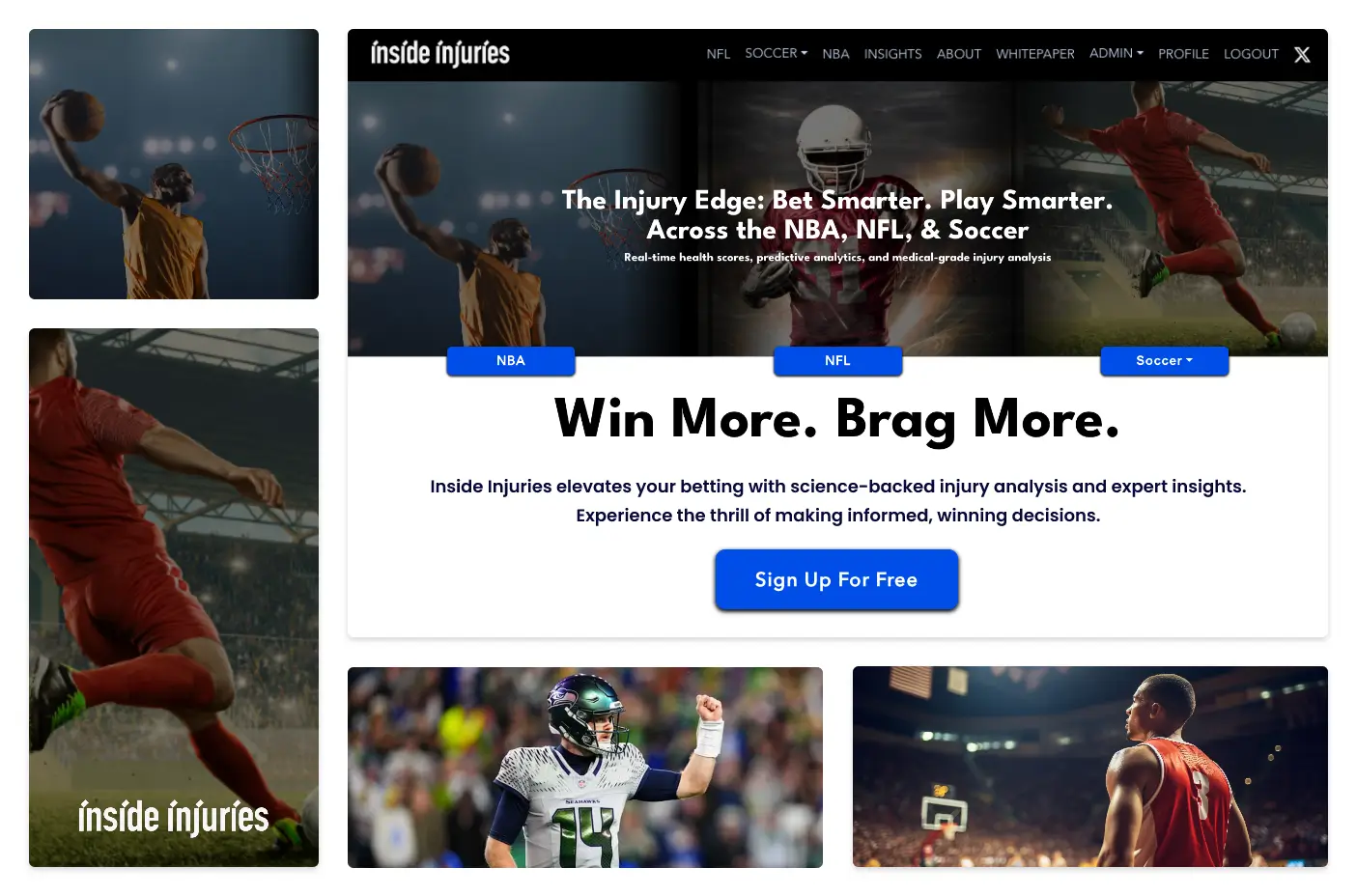
Inside Injuries is a specialized digital platform dedicated to advanced sports injury analysis, data-driven insights, and educational resources for athletes, fantasy sports participants, and healthcare-informed audiences. The platform was designed to translate complex radiological and medical insights into accessible, actionable intelligence for real-world sports decision-making. By combining medical expertise with analytics-driven interpretation, the platform enables users to understand injury severity, recovery trajectories, and performance implications in a structured and evidence-based format.
Despite its strong vision and niche positioning, the platform faced significant operational instability, architectural opacity, and performance degradation that threatened both credibility and scalability. The client required not just technical maintenance but continuous engineering support capable of stabilizing a partially inherited system while enabling future expansion. This engagement called for stabilizing an AI-driven sports analytics platform built on Node/React and Amazon Web Services before further expansion.
Approach
Given the absence of system clarity and the high operational risk, the engagement was initiated under a retainer-based discovery and R&D framework. Rather than committing to execution prematurely, Parker and Daniel structured the engagement around forensic technical analysis, architectural reconstruction, and infrastructure intelligence mapping. Making an inherited system traceable is the first step of any software project rescue.
The team conducted a full-stack audit spanning application architecture, service orchestration, database performance, crawler pipelines, and cloud infrastructure hosted on Amazon Web Services. Particular emphasis was placed on identifying hidden dependencies, undocumented data pipelines, and systemic failure points affecting real-time injury analytics delivery.
This disciplined methodology transformed ambiguity into structured knowledge and enabled data-driven decisions about what to stabilize first.
What challenges did Inside Injuries face before stabilizing its inherited Node/React platform on AWS?
Inside Injuries had taken over a partially implemented platform with no authoritative system map, no reliable documentation and an over-engineered server environment, and its injury analytics slowed as data volume increased. The result was five problems: undefined scope and system ownership, an incomplete and fragile codebase, untraceable infrastructure and data flows, an over-complex server topology, and performance degradation across infrastructure, crawlers and database.
Inside Injuries’ platform had no defined scope or system ownership
Inside Injuries faced operational urgency but complete structural ambiguity. There was no authoritative system map, no defined ownership boundaries, and no reliable documentation explaining how components interacted. Without understanding service dependencies, infrastructure provisioning, or data lineage, any direct development effort would have introduced systemic risk. Hidden coupling between services created the possibility of cascading failures from minor changes. From a governance perspective, the absence of scope clarity prevented cost control, accountability, and timeline predictability. Inside Injuries could not safely stabilize or enhance the platform while its scope, dependencies and ownership were unknown.
Inside Injuries’ inherited codebase failed under realistic traffic and data load
The platform had been transferred in a partially implemented state with inconsistent logic, missing workflows, and undocumented implementation intent. Features that appeared operational under limited testing conditions failed under realistic traffic and data load scenarios. No development documentation existed for the platform’s critical modules. This created a fragile engineering environment where modifications risked introducing regressions. From a business standpoint, the unstable codebase prevented feature velocity, degraded user trust, and increased maintenance overhead. Inside Injuries could not optimize the platform safely while its original architectural intent was unknown.
Inside Injuries’ infrastructure and data flows could not be traced
The infrastructure environment functioned as a black box. There was no verified architecture diagram, no data lineage documentation, and no clarity regarding external API ingestion versus internally crawled datasets. This prevented reliable debugging, performance tuning, and capacity planning. The lack of system intelligence also limited the client’s ability to assess platform reliability or make strategic product decisions. In real-time sports analytics systems, undocumented data flow introduces severe risk because latency, accuracy, and availability are tightly coupled. The absence of infrastructure visibility represented both a technical liability and a strategic governance failure.
Inside Injuries’ server topology was too complex to maintain
The server environment exhibited excessive architectural complexity without corresponding operational benefit. Service interactions were tightly coupled, scaling strategies were unclear, and debugging required deep system familiarity. This created a high barrier to entry for new engineers and significantly increased mean time to resolution for production issues. Over-engineering also inflated maintenance cost and slowed continuous delivery efforts. Inside Injuries’ architecture was technically sophisticated but operationally inefficient.
Inside Injuries’ platform slowed across infrastructure, crawlers and database
Persistent performance bottlenecks existed across infrastructure provisioning, crawler execution reliability, and database query responsiveness. Cloud resources were misaligned with workload characteristics, SSL configuration introduced avoidable latency, and crawler processes experienced unreliable database connectivity. Query inefficiencies and schema limitations further compounded response delays as data volume increased. For a platform delivering time-sensitive sports injury intelligence, delayed data propagation directly undermined user trust and platform credibility. Performance instability represented both a technical bottleneck and a market risk.
Key Metrics



SIMILAR PROJECT?
Inherited a Node/React platform that keeps breaking?
How did WebDesk Solution solve Inside Injuries’ inherited-platform challenges?
WebDesk Solution answered each challenge with one matching piece of work: structured discovery, stabilization-first re-engineering, infrastructure documentation and data lineage mapping, architectural rationalization, and end-to-end performance optimization.
WebDesk Solution ran structured discovery to define scope and system ownership
WebDesk Solution initiated a structured discovery program designed to replace assumptions with verified system intelligence. The team conducted architecture reconstruction, access audits, dependency mapping, and infrastructure profiling. This framework established clear ownership boundaries, validated service responsibilities, and translated business objectives into technically grounded deliverables. By formalizing scope through evidence-based analysis, the engagement eliminated downstream risk associated with undocumented dependencies and unknown system behavior. This discovery model became the operational foundation for the engineering work that followed.
Key deliverables:
- Architecture reconstruction: Replaced assumptions about the inherited system with verified system intelligence.
- Access audits and dependency mapping: Traced how services, infrastructure provisioning and data lineage interacted.
- Infrastructure profiling: Covered the cloud infrastructure hosted on Amazon Web Services before any change was made.
- Formal scope: Business objectives were translated into technically grounded deliverables through evidence-based analysis.
- Result: Clear ownership boundaries and validated service responsibilities, removing downstream risk from undocumented dependencies.

WebDesk Solution re-engineered the inherited platform, stabilizing business-critical pathways first
Rather than layering enhancements onto an unstable system, the team executed a controlled re-engineering strategy focused on restoring deterministic behavior across core workflows. Reverse engineering was used to reconcile intended functionality with actual runtime behavior. Inconsistent logic was corrected, incomplete implementations were resolved, and coding standards were normalized. Business-critical pathways were stabilized first to ensure operational continuity. This approach transformed the platform from a fragile environment into a reliable baseline capable of supporting continuous Node/React development and AI-driven feature expansion.
Because no development documentation existed, our engineers performed behavioral reverse engineering across critical modules, reconstructing the platform’s architectural intent before any meaningful optimization began.
Key deliverables:
- Reverse engineering: Reconciled intended functionality with actual runtime behavior across critical modules.
- Logic repair: Inconsistent logic was corrected and incomplete implementations were resolved across the codebase.
- Coding standards: Normalized across the platform to restore deterministic behavior in core workflows.
- Stabilize-first order: Business-critical pathways were stabilized first to protect operational continuity.
- Result: A reliable baseline able to support continuous Node/React development and AI-driven feature expansion.

WebDesk Solution documented the infrastructure and mapped data lineage end to end
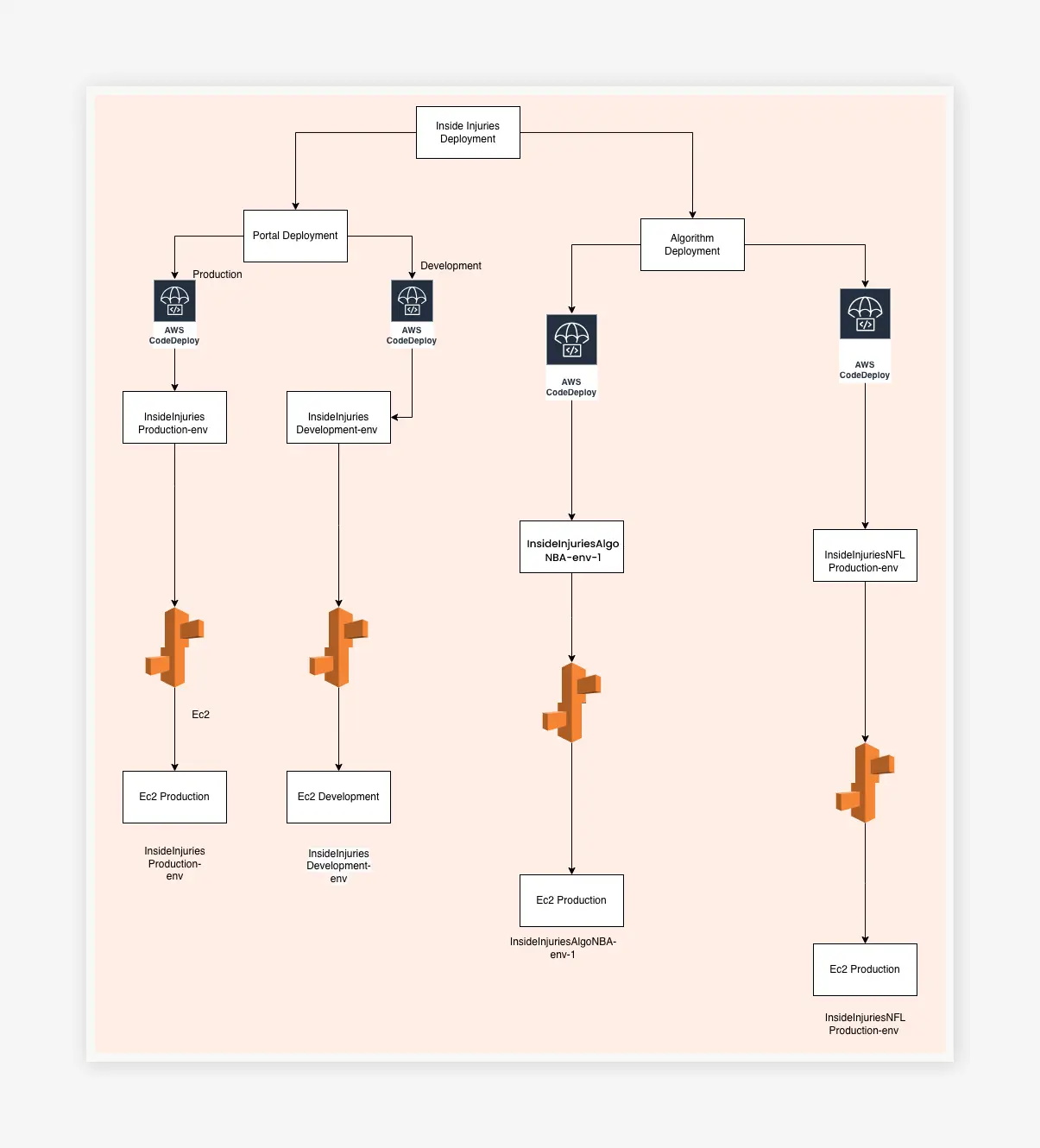
WebDesk Solution produced full-spectrum system documentation covering infrastructure topology, service communication patterns, database architecture, and data ingestion pipelines. The team established traceability between external data sources, internal crawlers, and persistence layers. This system intelligence framework enables faster debugging, safer deployment cycles, and strategic capacity planning. For the client, the documentation eliminated operational opacity and restored governance over their digital asset. Infrastructure knowledge transitioned from implicit to institutional, significantly reducing long-term dependency risk.
Key deliverables:
- Topology and services: Documented infrastructure topology, service communication patterns and database architecture.
- Data ingestion pipelines: Documented end to end, from external data sources to persistence layers.
- Traceability: Established between external data sources, internal crawlers and persistence layers.
- Operational use: The documentation supports faster debugging, safer deployment cycles and strategic capacity planning.
- Result: Infrastructure knowledge moved from implicit to institutional, restoring the client’s governance over the platform.
WebDesk Solution rationalized the server architecture for maintainable continuous development
The existing architecture was rationalized through a developer-centric lens to balance scalability with maintainability. Service responsibilities were clarified, interaction patterns were simplified, and workflow complexity was reduced without compromising resilience. This conceptual simplification enables faster onboarding, improved debugging efficiency, and predictable enhancement cycles. The platform is now structured to support continuous development without operational fragility.
Key deliverables:
- Service responsibilities: Clarified across the existing architecture through a developer-centric lens.
- Interaction patterns: Simplified between services that had been tightly coupled.
- Workflow complexity: Reduced without compromising the platform’s resilience or scalability.
- Debugging: Improved efficiency where debugging had previously required deep system familiarity.
- Result: Faster onboarding, improved debugging efficiency and predictable enhancement cycles.

WebDesk Solution optimized cloud resources, crawlers, APIs and the database
A comprehensive performance optimization program was implemented across infrastructure provisioning, crawler reliability, and database performance. Cloud resources were right-sized to match workload profiles, SSL configuration was optimized to reduce latency, and auto-scaling mechanisms were activated to handle traffic variability. Crawler processes were enhanced for connection stability and query efficiency, while database indexing and schema optimization significantly reduced query execution time. These improvements restored real-time data processing capability, stabilized platform responsiveness, and reinforced user confidence in time-sensitive injury analytics delivery.
To reduce server load time, we also optimized the platform’s API calls to OpenAI, Sportsdata.io and Entitysports and rescheduled the related cron jobs so they no longer run at the same time.
Key deliverables:
- Cloud resources: Right-sized to workload profiles, auto-scaling activated and SSL configuration optimized to reduce latency.
- Crawler processes: Enhanced for connection stability and query efficiency against the database.
- API calls and cron jobs: Calls to OpenAI, Sportsdata.io and Entitysports optimized and related cron jobs rescheduled to avoid overlap.
- MySQL: Indexing and schema optimization reduced query execution time for the platform’s analytics queries.
- Result: Data ingestion nearly 50% faster and query performance around 40% better, as the outcome cards report.
FREE CONSULTATION
Need a discovery audit before you change an inherited codebase?
What results followed Inside Injuries’ platform stabilization?
Reduced Unplanned Downtime
System stabilization reduced unplanned downtime by approximately 80%, transforming an unstable platform into a resilient production environment.
Faster Data Ingestion
Optimized crawler logic and infrastructure workflows accelerated data ingestion by nearly 50%, restoring real-time injury data delivery.
Improved Query Performance
Database indexing and schema optimization improved query performance by around 40%.
A Resilient, Scalable Foundation for Continuous AI-Driven Analytics
The engagement transformed the platform from an unstable, poorly understood system into a resilient and scalable production environment capable of supporting continuous AI-driven sports analytics delivery. These improvements enhanced developer onboarding efficiency and ongoing maintenance velocity. As a result, the client now operates with greater system visibility, lower operational risk, and a stable foundation for long-term growth, while users benefit from more reliable real-time injury data delivery and increased trust in the platform.
Conclusion
Inside Injuries shows that an inherited platform has to be understood before it can be fixed. Discovery came first: architecture reconstruction, access audits and dependency mapping replaced assumptions with verified system intelligence. Business-critical pathways were stabilized before any enhancement, and the rest of the work covered documentation, architectural rationalization and performance across AWS, the crawlers and the database. The order mattered, because hidden coupling between services meant a minor change could cascade into failure. For any team taking over a partially built Node/React platform, the same sequence applies: map the system, stabilize the critical paths, document what is learned, and only then optimize.
Questions About Inside Injuries’ Platform Stabilization
What did discovery on Inside Injuries’ inherited platform cover before any code changed?
How did reverse engineering help stabilize Inside Injuries’ inherited codebase?
What changed in Inside Injuries’ Amazon Web Services setup, including auto-scaling?
How were the results of Inside Injuries’ stabilization measured?
What made Inside Injuries’ crawlers unreliable, and what else reduced server load?
Which database indexing and performance tuning changes improved Inside Injuries’ query performance?
What system documentation did Inside Injuries receive?
How was Inside Injuries’ server architecture simplified?
Which technologies and data sources does Inside Injuries’ platform use?
How does this project fit with Inside Injuries’ later modernization and maintenance work?
Related Work


