Adobe Commerce B2B Features: What Magento Gives You Natively, and Where Custom Work Starts

Category
eCommerce Tips & Trends
eCommerce businesses always need to stay one step ahead of their competitors in this ever-evolving eCommerce industry for continuous growth. And eCommerce migration has become one of the ways for them to scale their business and outperform competitors.
Over 27% of eCommerce businesses are considering migrating to a new platform. This is often driven by a need for new features and functionalities unavailable on their current platform, scalability limitations, or other similar factors.
Making a switch to a new platform depends on your current requirements. However, if you choose to do so, it can put all your efforts in vain if you fail to follow the proper steps.
In this blog post, we will explain the basics of eCommerce migration and provide detailed information about the different types of migration; we will also explain the signs that indicate the need for migration and provide a general overview of the migration process.
So, let’s start.
What is eCommerce Migration?
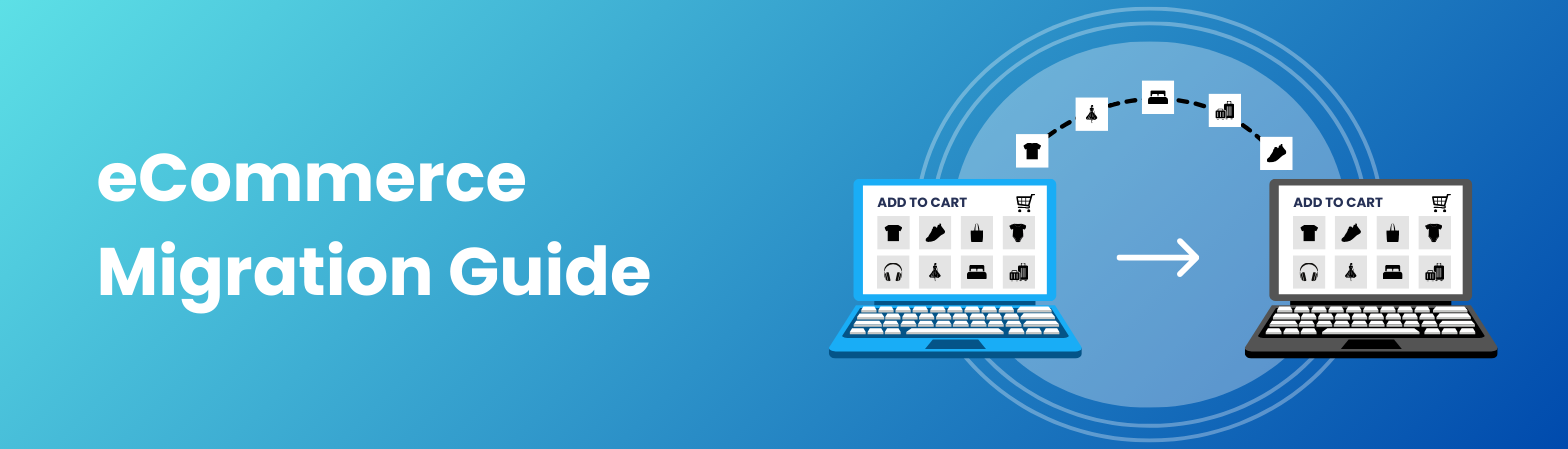
eCommerce migration refers to transferring an online store from one platform to another. This could involve moving from a legacy system to a modern eCommerce platform or shifting between platforms to improve functionality, scalability, or user experience.
The primary goal of eCommerce migration is to enhance customers’ online shopping experience, streamline merchants’ operations, and stay competitive in the ever-evolving digital landscape. A well-executed migration can result in improved website performance, enhanced security, better SEO ranking, and increased customer satisfaction, ultimately leading to higher conversions and business growth.
In short, ecommerce migration is a strategic move to better the online site’s operation, efficiency, and success.
Still Not Sure Which eCommerce Platform is Right for You?
Let our experts analyze your business needs and recommend the best platform for your growth. WebDesk Solution will help you analyze your business needs and recommend the best platform for your growth
- Get Personalized Recommendations
- Compare Platforms Side by Side
- Ensure a Seamless Migration
Types of eCommerce Migration
Entrepreneurs have the opportunity to select from various types of migrations that may perfectly suit their requirements and objectives. Let’s discuss in detail to help you understand which type of migration fits your business objectives and growth strategy better.
Platform to Platform Migration
Typically, it is a process of moving your store from one eCommerce platform to another one. eCommerce business owners usually follow this to leverage certain benefits of new features, performance improvement, or better prices.
Monolith to Headless Transition
This involves changing the layout or architecture of your online store. It moves from a single, integrated system (monolith) to a more scalable and flexible approach (headless). It includes separating the front-end and back-end which allow for more customization capabilities without losing existing data and features.
Phased Migration Option
This is a structured approach to moving your online store to another platform. Instead of shifting everything together, it involves a stepwise process. It includes shifting specific modules or sections of your online store in a phased manner. This type of migration eliminates the risk of losing data, reduces downtime, and ensures seamless site migration.
Want To Ensure a Smooth eCommerce Migration?
WebDesk Solution has over a decade of experience in eCommerce development. Leverage our expertise for a hassle-free transition.
Start Your Smooth Migration!When to Consider eCommerce Migration?
Below are several signs that indicate that it’s time to consider migrating your eCommerce store. Let’s examine them in detail.
Poor Performance
Your eCommerce storefront is your most important digital asset, so it should perform well anywhere, anytime. If downtime and other performance parameters are not up to the mark, it’s time for you to switch to another eCommerce platform.
Your Store Fails to Handle Massive Traffic
Your online store may have the required features, but you will lose revenue and customers if it fails to accommodate colossal traffic (especially during the festive season). Hence, you need to migrate your eCommerce store to a platform that is scalable and stable.
High Cost of Ownership
Using a platform within your budget is still vital even though effective platforms are costly. Your existing platform’s high total cost of ownership (TCO) indicates that it is too expensive to purchase, operate, and maintain. It can be a sign that you should do eCommerce store migration.
Using a platform within your budget is still vital, even though effective platforms are costly. Your existing platform’s high total cost of ownership (TCO) indicates that it is too expensive to purchase, operate, and maintain. It can be a sign that you should do an eCommerce store migration. These cost and performance barriers are among the most common eCommerce challenges businesses face, and addressing them early helps ensure long-term growth.
Lack of Innovation in Outdated Platform
With an outdated platform, your eCommerce development partners will be busy fixing the bugs. Such outdated platforms are hard to customize and need more innovation.
It’s a sign that your online store may not swiftly adapt to new market standards or fulfill customer expectations. In that case, it’s vital to choose eCommerce platform migration.
Poor Customer Experience
One of the studies has indicated that brands with a customer experience mindset grow revenue 4-8% higher than the rest of the companies. If your current platform offers a poor customer experience and you don’t want to compromise the user experience, then you must consider eCommerce replatforming.
eCommerce Platforms to Consider for Migration
If you’re considering migrating to a new platform, you have several options. We can categorize these solutions into four main groups.
Software as a Service (SaaS) Platform
Most likely, you’ve already worked with a few SaaS eCommerce platforms. These software programs are hosted, developed, and maintained by a third-party vendor on a subscription basis.
You have to subscribe to the program for a monthly or a yearly plan. The software is not yours and you may not have complete control of the platform. Squarespace and Shopify are a few excellent examples.
Cloud Solution
Cloud eCommerce systems employ an infrastructure as a service (IaaS) paradigm and are a hybrid of SaaS and on-premise solutions. Put another way, the business hosts its store on a cloud services provider like Microsoft Azure or AWS, where implementing a robust Cloud Security Architecture becomes essential to safeguard customer data, ensure compliance, and maintain business continuity.
Moving the eCommerce stack to the cloud carries a massive price tag of around $170,000 per annum or even more, on average (depending on the platform and can vary). Moreover, eCommerce businesses must also pay many license fees and hire a technical team to maintain their eCommerce website.
On-premise Solution
A server owned by your company is used to install and operate an on-premise eCommerce platform. As a result, you will have more control over your infrastructure’s security, data management, and customization.
But that’s where the benefit ends. The greater setup and management costs associated with on-premise platforming have contributed to its decline in popularity.
Headless Solution
Headless commerce is a cutting-edge approach to eCommerce that decouples the front-end presentation layer from the back-end functionality. This means the “head” (the front-end) is separated from the “body” (the back-end), allowing for greater flexibility and customization.
With a headless approach, you can create unique and engaging customer experiences across various channels, including websites, mobile apps, social media, and even IoT devices. By using APIs to connect the front-end and back-end systems, you can deliver content and functionality in a faster and more efficient manner.
One of the main advantages of headless commerce is its adaptability to the ever-changing digital environments. Businesses can easily integrate new technologies and channels without the need to rebuild their entire eCommerce store.
Choosing from the best headless eCommerce platforms can further enhance this flexibility, allowing for seamless customization and faster innovation across customer touchpoints.
Looking for Expert Guidance on eCommerce Migration?
Let our certified eCommerce experts help you. Schedule a meeting to benefit from our years of experience in the field.
Schedule a FREE Consultation9 Steps to Follow for Successful eCommerce Migration
The process of eCommerce migration may seem daunting at first, but following these steps will make the transition process smooth and swift.
1. Include All Stakeholders
Including all stakeholders is not just a checkbox for an eCommerce migration; it is the foundation for a successful migration.
It is very important to have IT, marketing, operations, customer service, and management representatives involved in the process. It will help to ensure that all goals, time constraints, and expectations are the same for everyone.
Every stakeholder offers their own, exclusive views and insights, highlighting issues that must be dealt with, as well as good business opportunities and possible challenges. Bringing along the stakeholders will produce a feeling of ownership and accountability, thus improving problem-solving and work involvement through the migration process.
Ask Yourself:
- What is the idea behind moving to the new platform?
- What are the pain points, or shortfalls, regarding the existing platform:?
- Which part of a migration will help our business in terms of scaling, features, and customer experience?
- Which resources do we need to make sure that the migration is successful?
- How can we guarantee consistent communication and teamwork among all participants throughout the process?
Stakeholder engagement in an eCommerce migration process will not be merely about participation but fostering collaboration, shared ownership, and joint success. By engaging all the stakeholders from the very beginning and by asking the right questions you set a way for an unwrinkled process that matches your business goals and makes for the growth of the enterprise.
2. Understand Your Business Needs
Assessing your business needs is the first step in the transition period of eCommerce. To start with, you need to do an in-depth analysis of your current platform’s powerful aspects, the areas that need improvement and the shortcomings of the platform.
You need to determine the main issues like increased scalability, better user experience or advanced marketing positions to follow your business plans and finalize your migration plan accordingly.
- By identifying your special demands such as product range, scalability, and integration requirements, you can go for an eCommerce platform that is intended to implement the customized solutions that suit your needs.
- Understanding the goals of your business and projections of growth helps you to choose the platform that can grow with your business and stay for long-term success with your business.
- Having a budget constraint in mind is essential in choosing an eCommerce platform that not only satisfies your business requirements but also suits the financial boundaries.
Through a detailed comprehension of your eCommerce business needs, you will surely obtain the desired results that will later contribute to the successful eCommerce transition.
3. Select an eCommerce Platform
Selecting the right eCommerce platform is a critical decision that can significantly impact your business’s success. Here’s how to choose wisely while considering important factors such as:
- Price
- Set of features
- Customer support
- Scalability
- Customization options
There are many eCommerce platforms to choose from including:
Shopify:Offers pricing plans suitable for startups to enterprise-level businesses, with features like customizable themes, app integrations, scalability, and 24/7 support.
WooCommerce: A WordPress plugin with a range of free and premium extensions, customizable themes, scalability with WordPress, and community support.
Magento: Known for its robust features, scalability, customization options, and enterprise-level support, but may require technical expertise and higher upfront costs.
By carefully evaluating these factors and considering your specific business needs, you can select an eCommerce platform that empowers your online store’s growth and success.
4. Plan the Migration
Planning the migration of your eCommerce platform is a crucial step that requires thorough preparation and attention to detail. Here’s how to effectively plan your migration process:
- Data Migration Strategy
- Timeline and Milestones
- Risk Assessment and Contingency Planning
- Resource Allocation
- Communication Plan
- Test functionalities, integrations, and user experience
- Address any issues or bugs before launch
- Ensure a smooth transition and adoption of the new platform
- Conduct final testing and validation
By following a structured plan and addressing key aspects such as data migration, timeline, risks, resources, communication, testing, training, and go-live preparation, you can ensure a successful and smooth eCommerce platform migration.
5. Design and Develop Your eCommerce Website
The design and development of the eCommerce site is critical during the migration process as its purpose is to create a platform for a fast and smooth online shopping experience.
- Conceptualize a user-centric design that embodies your brand identity and appeals to your target audience as the starting point.
- Work with a team of experienced designers and developers to develop an awesome, well-structured website that applies modern designs and excellent eCommerce UX practices.
- Focus on user-friendly navigation, convenient product sorting, and a hassle-free checkout to satisfy customers and induce sales.
- Make sure that your site is optimized for mobile users wherein you are able to capture more mobile shoppers, and give them a consistent experience irrespective of the device.
The attention to those aspects of the design and development process, and strict alignment with the current requirements and the future movement in the digital marketplace, will enable you to create a site with the latest eCommerce trends.
6. Optimize the Checkout Process
Streamlining the checkout experience is a crucial step towards conversion boom and giving customers a hassle-free shopping time during e-commerce migration. Follow checkout best practices to reduce friction, minimize the steps to purchase, and optimize each stage to a final purchase.
- To make your customers be informed and involved during the checkout process, keep them well-informed with appropriate progress indicators and steps like cart review, shipping details, payment information, and order confirmation.
- To satisfy customer requirements and boost convenience, a variety of payment options including credit/debit cards, digital wallets, and alternative payment methods should be incorporated.
- You can also offer a guest checkout option to enhance the checkout experience,. This allows customers to make a purchase without creating an account, reducing friction and saving time. This approach can lead to higher conversion rates and increased customer satisfaction.
- Implement auto-fill features for forms as well as the option for customers to safely save their payment and shipping details for future purchases in order to avoid repetitive data entry.
Increase your online sales and decrease shopping cart abandonment rates by optimizing the checkout process. This will also improve customer perception of the website.
7. Conduct an SEO Audit
Performing an SEO audit is the key to making your e-commerce migration visit your business. This comprises in-depth investigation of your website’s SEO performance, covering such areas as on-page optimization, technical SEO part, backlink profile, to an overall search engine presence.
Through an SEO audit of your site pre- and post-migration, you can spot problematic spots, resolve them, and develop a strategy to boost your website’s search engine rankings and traffic regarding organic visitors.
Perform a thorough SEO audit with the essential components like keyword research, content quality and relevance, site structure, navigation, mobile-friendliness, page speed, meta tags, and schema markup. Analyzing these factors enables you to build strong groundwork for successful SEO practice and makes it possible to position your e-commerce site optimally for high rankings in search engine result pages (SERPs) and in order to attract traffic.
To ensure effective results, hire a digital agency having expertise in SEO services that can guide you through the technical and strategic complexities of eCommerce SEO during migration.
8. Testing
Testing is the most needed stage in an eCommerce migration undergoing a process where the new website must work properly and provide user satisfaction. Carry out comprehensive testing on the diverse devices, browsers, and operating systems to locate and fix any bugs, glitches, and cross-platform incompatibilities.
Check all the functionalities including product browsing, shopping cart, checkout processes, payment gateways, and account creation to avoid any error. Besides, conduct load testing to verify website performance under heavy traffic conditions, and work for speed and reliability.
9. Launch
The launching of the eCommerce site is a significant milestone in the migration. It is done by launching the site and ensuring that it is available for the targeted customers. Prior to the launching, make sure that user experience is checked so that there are no quality compromises during the process.
Work with the development team and stakeholders to establish a launch date and prepare your promotional activities to announce the new site to your audience. Keep an eye on the site after it is launched so that you can tackle any problems right away and tweak performance for better user experience.
Ready To Migrate Your eCommerce Store for
Transformative Growth?
Transformative Growth?
From platform selection to data migration, we provide comprehensive solutions tailored to your needs.
Let’s Start Your eCommerce MigrationExposing Some Common Myths About eCommerce Migration
Indeed, eCommerce migration is a challenging process; there is much more to be involved when considering it. But it’s not as impossible as it seems. Here are some common myths that need to be addressed before you voyage on a journey of eCommerce site migration.
Migration is Exclusive to Big Businesses
It’s a myth that eCommerce replatforming is only for big businesses. However, companies of all sizes can gain benefits from eCommerce migrations. Migrations can also enhance small and medium-sized organizations’ functionality and online presence.
It Takes Too Much Time
It’s not completely true that the migration process takes too much time. eCommerce migrations may be completed quickly with the right preparation and execution, reducing downtime.
You Lose SEO Ranking and Traffic
If you do not plan your migration properly, it can affect your SEO rankings. However, using the right SEO migration techniques, you may retain or even improve your search engine rankings. For example, if you’re changing your domain name during migration, following the proper steps to avoid SEO loss is essential to preserve visibility and traffic.
Handiwork is the Best Method
You might have a great team. But replatforming is not an easy task. Hiring specialists and professionals can guarantee a successful move, save time, and lower risks.
Final Words
eCommerce migration is a strategic move to scale and future-proof your online business. While this guide covers the essential considerations, the process involves multiple technical and SEO-related complexities that must be handled with precision.
Improper planning or execution can lead to data loss, traffic drops, or functionality issues. That’s why it’s crucial to partner with a team that understands the nuances of seamless store migration.
At WebDesk Solution, our eCommerce migration services are designed to ensure smooth replatforming with minimal risk and zero downtime. From preserving SEO value to maintaining data integrity, we help you migrate confidently and efficiently.