Adobe Commerce B2B Features: What Magento Gives You Natively, and Where Custom Work Starts

Category
eCommerce Tips & Trends
In eCommerce, perception plays a major role in purchase decisions. Therefore, the pricing you set can make or break a sale. Showing the right price first can influence how every other option is perceived, which is the power of price anchoring.
When done right, price anchoring makes price options feel more appealing, guides buyers toward profitable choices, and improves overall revenue. It also builds trust, encourages faster decisions, and increases perceived value. On the other hand, a poorly executed strategy can create doubt and make prices feel unclear or unfair.
In this guide, you can expect to learn what price anchoring is, how it works, and practical ways to use it in your business.
What is Price Anchoring?
Price anchoring is a pricing strategy where a reference price is shown first to influence how other prices are perceived. The initial price acts as a benchmark that shapes how customers perceive value and make purchase decisions.
For instance, if a higher price is shown first, a discounted amount appears more attractive, which influences the buyer’s decision without any change to the product.
How Price Anchoring Works
Price anchoring works by showing a reference price first, which changes how customers feel about the prices that follow. This strategy involves setting an initial price as a benchmark so that all subsequent prices are judged against it.
When customers see that first number, they naturally compare everything else to it. This makes some options feel like a better deal, even if the actual price hasn’t changed.
For eCommerce businesses, this means the way prices are displayed can influence buying decisions. The psychology behind price anchoring includes the following:
- Consumer Psychology: Humans tend to compare prices to the first number that they see.
- Decoy Effect: The presence of the less desirable alternative makes the other choices more desirable.
- Heuristics: Many buyers assume that higher prices signal better quality, allowing them to make faster decisions.
- Perceived Savings: The discount will seem greater in comparison with the reference price.
With these principles in mind, companies can structure pricing in a manner that seems logical, equitable, and convincing for their consumers.
Pros and Cons of Price Anchoring
Price anchoring requires an awareness of both the advantages and disadvantages to drive growth without affecting brand perception.
Advantages of Price Anchoring
Price anchoring leverages consumer psychology to help businesses increase revenue and gain valuable insights. This can lead to better sales performance, highlight product value, and enhance trust with customers.
- Increases Sales: Anchored prices make products appear more affordable, encouraging customers to purchase items they might otherwise avoid. This effect is explained by behavioral economics, where consumers base decisions on perceived value rather than absolute price.
- Generates Insights: Businesses gain insights into customer preferences and decision-making patterns, supporting more precise pricing strategies.
- Supports Agility: Price anchoring can be adjusted as market trends and consumer behavior change, making it a flexible tactic in eCommerce and retail markets.
- Upselling: Comparing products at different price points highlights the added value of higher-tier options and increases average order value.
- Builds Trust: Transparent pricing with clearly visible anchors assures customers that the discount is genuine, building confidence in your brand.
Drawbacks of Price Anchoring
Despite its effectiveness, price anchoring carries risks when misused. Improper execution can damage trust, reduce future sales, and negatively affect brand perception.
- Impacts Customer Trust: Inflating the anchor price can make shoppers feel manipulated and undermine credibility and loyalty.
- Reduces Long-Term Effectiveness: If customers are frequently exposed to anchored pricing, they may become less sensitive to any subsequent offers. It may diminish the effectiveness of this sales technique.
- Devalues Products: When products are consistently sold below perceived value, customers may question quality, which can harm brand reputation and positioning.
Types of Price Anchoring
Price anchoring takes many forms depending on where it is used. All of these approaches rely on comparison to establish value, making it easier for customers to evaluate prices and make confident decisions. Brands usually select the approach based on product range, target audience, and buying intent.
- Strikethrough Pricing: Sellers indicate an original higher price next to a reduced price, usually crossed out. This visual difference immediately communicates savings, creating a sense of urgency and a strong deal perception.
- High Price Anchors: Businesses place a luxurious, expensive product next to a product with a moderate price. When buyers notice the high price, they consider the middle product to be cheaper and more valuable.
- Low Price Anchors: Companies bring a simple, low-priced version that appears to be limited or of lesser quality. That comparison encourages customers to choose higher-priced options that appear more reasonable in terms of value.
- Tiered Pricing: Businesses offer a range of pricing options, sometimes highlighting a particular option as “Most Popular” or “Best Value”. This method encourages customers toward a preferred selection without direct persuasion.
- Competitor-Based Anchoring: Comparing prices to competitors, companies highlight cost advantages, reinforcing value relative to external benchmarks.
- Comparative Bundle Pricing: A company offers bundled products at different price points, often highlighting the middle tier as the most reasonable purchase.
Examples of Price Anchoring
These price anchoring examples show how businesses use reference prices to influence value perception and pricing decisions in real life.
Seasonal Discounts and Crossed-Out Prices
Retailers frequently use crossed-out prices during seasonal sales to anchor perceived savings. Customers often see an original price displayed alongside a discounted one, making the lower price feel time-sensitive and more valuable.
For example, during end-of-season sales, a sweater originally listed at $50 may be shown at $30. The higher reference price sets expectations, making the discounted price feel like a strong deal, even if the product is regularly sold at a similar rate.

Tiered Pricing on SaaS Product Pages
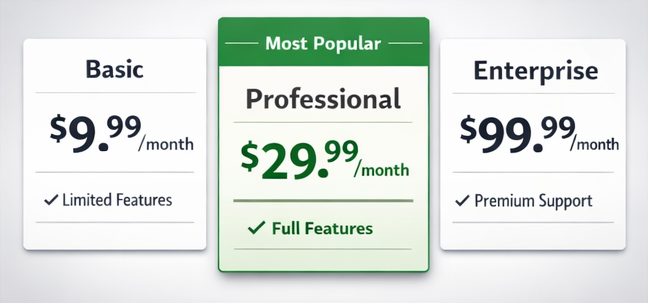
Many SaaS companies use three-tier pricing layouts to influence plan selection. The highest-priced plan establishes the anchor, making the middle option appear reasonably priced and well-balanced.
For instance, when users see a Basic plan at $9.99, a Professional plan at $29.99, and an Enterprise plan at $99.99, most gravitate toward the middle tier. The premium option frames value, while the lowest tier signals limitations.
High-End Products Used to Frame Value
Luxury or premium products are often displayed alongside mid-range options to define the upper limit of value. Even if they sell less frequently, they influence how other products are perceived.
For example, displaying a $10,000 luxury watch next to a $2,000 model makes the lower-priced option feel more attainable, while still maintaining a sense of quality and exclusivity.

Free Trials That Lead to Paid Subscriptions
Free trials act as a powerful price anchor by setting the initial cost at zero. Once users build habits and experience value, the transition to a paid plan feels easier to justify.
Streaming and software platforms commonly use this approach. After users personalize settings, save content, or rely on features during a trial, paying a monthly fee later feels preferable to losing access.

Bundled Offers That Emphasize Savings
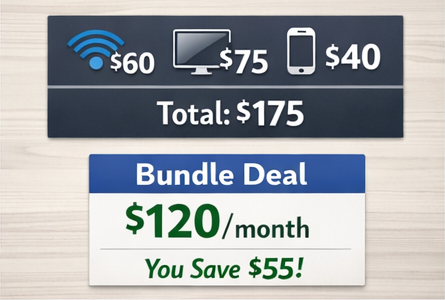
Bundle pricing anchors value by showing the combined worth of individual items before presenting a single bundled price. This shifts focus from individual costs to perceived savings.
Telecom and service providers often bundle internet, TV, and phone plans at a price lower than purchasing each service separately. While customers may spend more overall, the bundle feels economical due to the reference comparison.
When Doesn’t Price Anchoring Work?
Price anchoring loses effectiveness in some situations where customers question credibility, already understand true market value, or see little real benefit in the comparison. The effectiveness of this tactic depends on perception, trust, and meaningfulness. Weak execution or the wrong context can even damage brand confidence.
- Insignificant Discounts: Small discounts don’t create excitement. A minor price reduction on a high-value purchase fails to impress consumers, making the anchor price ineffective.
- Well-Informed Buyers: When consumers are well-informed about prices, specifications, and competitors, there are fewer chances to rely on reference prices. For such consumers, price anchoring becomes less effective.
- Competitive Price Battles: Price anchoring against competitors can trigger pricing battles that reduce margins, particularly for small or emerging businesses.
- Unrealistic Anchor Prices: When the reference price is exaggerated and not very believable, it lacks convincing power. Shoppers quickly recognize exaggerated anchors, which leads to distrust and hesitation in buying.
- Zero Price Anchors: Offering a product for free can create strong resistance when customers are later asked to pay for it. When customers perceive a product’s value as zero, converting them into paying users becomes extremely difficult without triggering negative reactions.
5 Tips for Using Price Anchoring
Price anchoring means how prices are viewed by setting a clear reference point. The simple ways to implement it effectively are mentioned below.
Display Prices Clearly and Prominently
Place prices in places where consumers see them immediately. Clear visibility reduces friction, sets expectations early and allows anchors to shape perception before shoppers consider alternatives or features.
Use Meaningful Price Comparisons
Present side-by-side pricing and feature comparisons across variants. This allows customers to quickly understand product value, strengthening the anchor that influences their purchasing decision.
Align Anchors with Brand Positioning
Choose anchors that reflect brand value and the target audience. Premium brands take advantage of higher reference points, while value-focused brands anchor against functional alternatives to highlight affordability.
Avoid Unrealistic Reference Prices
Build credibility by using honest anchors that are tied to realistic market pricing. Inflated references create doubtfulness, undermine trust and counteract the efficacy of discounts and comparisons over the longer term.
Test and Optimize Pricing Presentation
Experiment with different elements such as anchor placement, labels, and layouts. Ongoing testing reveals how buyers respond, allowing data-driven adjustments that increase conversion rates without reducing margins.
Wrapping Up
Price anchoring influences how customers compare prices and judge value across eCommerce stores. Clear anchors help customers decide faster, support upselling, and improve conversion rates. Strong execution depends on honest reference prices, meaningful comparisons, and alignment with customer expectations. When used thoughtfully, price anchoring becomes a long-term pricing advantage rather than a short-term sales tactic.
WebDesk Solution helps eCommerce brands understand and apply price anchoring concepts to improve pricing clarity and customer decision-making. Our team shares insights and best practices around pricing presentation and customer-focused decision-making.
Want to better understand pricing strategies that help customers make confident decisions? Reach out to WebDesk Solution to learn more about creating a smarter, more customer-centric eCommerce experience.