
Quick Summary
Snowy Owl Cove, a boutique luxury skincare brand, had shoppers who felt overwhelmed by its product range and unsure which items suited their skin. WebDesk Solution built a custom product recommendation quiz, a recommendation engine and a checkout cross-sell on Volusion without moving platforms, using a Node.js microservice and a JavaScript widget. Results: a 42% quiz completion rate, a 27% lift in site conversion within 60 days and a 19% rise in average order value.
Overview
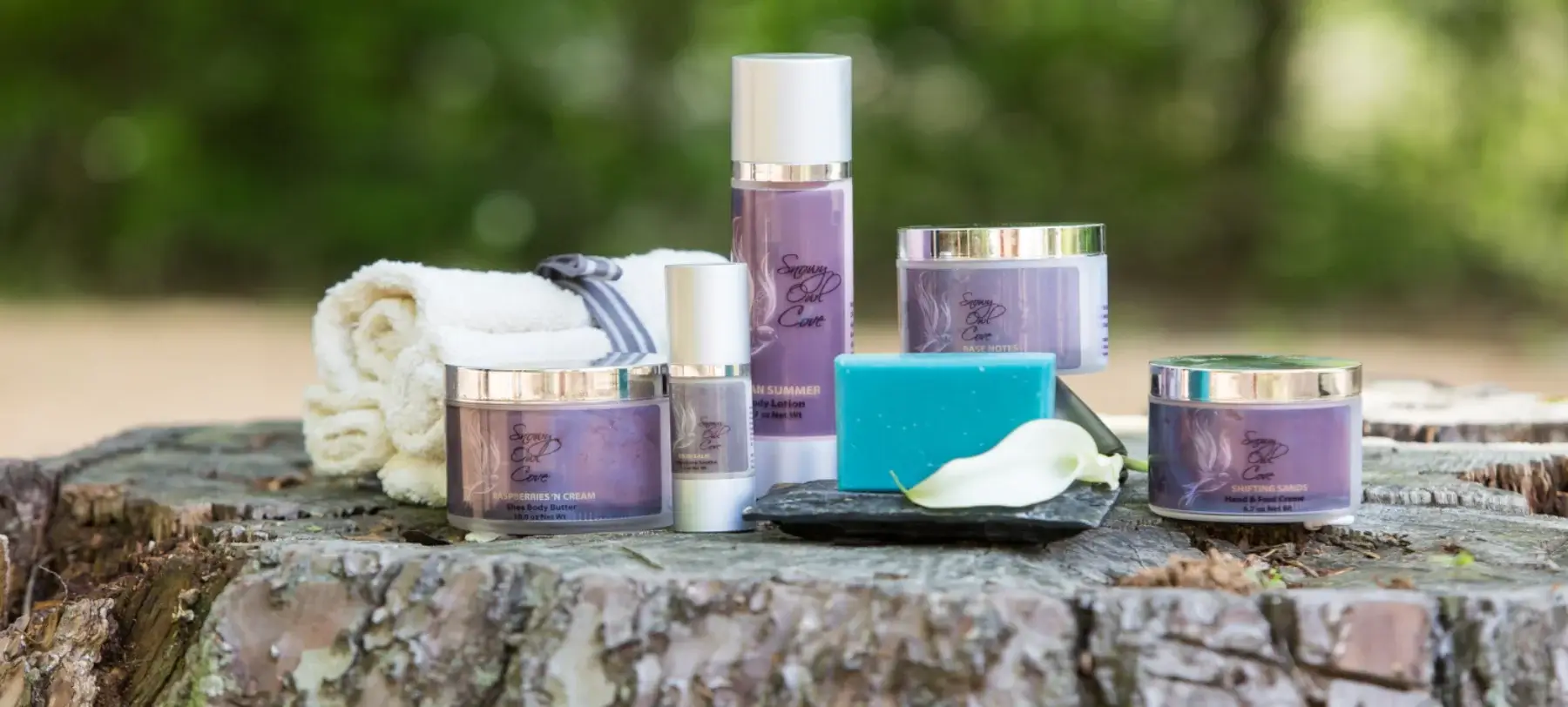
Snowy Owl Cove is a boutique luxury skincare brand founded by Patricia A. Tyson. Its handcrafted range includes bath salts, bath bombs, creams, lotions, facial creams and body butters, formulated for a variety of skin types. Customers often felt overwhelmed by the broad product range and unsure which items would best address their unique skin concerns.
Snowy Owl Cove wanted a shopping journey that went beyond browsing static product pages, one where shoppers would feel guided, as if consulting a skincare expert, even before adding items to their carts. To achieve this, Snowy Owl Cove needed a quiz that could ask relevant questions, identify individual skin needs and recommend products straight away. Complicating matters, its storefront was built on Volusion, a platform with limited support for dynamic, real-time features. Traditional plug-and-play solutions were off the table. Instead, Snowy Owl Cove needed a custom-built quiz that worked within Volusion’s constraints. Snowy Owl Cove asked WebDesk Solution to build it.

Approach
Volusion’s rigid architecture presented two critical challenges: no third-party app support and very limited scripting access. To launch a quiz that felt instant, we engineered every component from the ground up.
We began with strategy sessions to map the ideal customer journey. What began as a desire for a “skin type quiz” quickly evolved into a more ambitious plan: not just asking questions, but analyzing responses in real time, refining recommendations over months, and even surfacing complementary upsells at checkout. Our team documented every possible branch in the questionnaire-everything from “sensitive vs. oily” to “anti-aging concerns”-and outlined how each answer would translate into specific product tags.
Given Volusion’s limitations, we couldn’t rely on existing plugins or modules. Instead, our architects designed a standalone backend dashboard-essentially a lightweight microservice sitting outside Volusion that communicated via secure API calls. We chose Node.js with Express.js for the backend to handle dynamic branching logic and manage product-tag mappings efficiently. For data storage, MongoDB provided the flexibility to store evolving question logic, so the Snowy Owl Cove team could update quiz flows on the fly. On the frontend, we opted for a JavaScript widget embedded via Volusion’s ScriptEditor that rendered the quiz step-by-step as customers interacted.
The quiz engine returned tailored product suggestions in under 200 milliseconds and fed a Google Analytics feedback loop that Snowy Owl Cove could use to change which products showed first and adjust attribute weights.
We extended our dashboard to support “upsell logic” flags-administrators could tag specific SKUs as cross-sells. On the checkout page, a lightweight JavaScript snippet fetched these tags and displayed complementary items dynamically, mimicking native Volusion functionality without installing external apps.
Throughout development, we held weekly check-ins with the Snowy Owl Cove team. Early prototypes were deployed to a staging environment where real users provided feedback. We A/B-tested various quiz flows-some emphasizing “skin type + concern,” others highlighting “fragrance + texture.” Custom heatmap tools tracked where users hesitated, enabling us to streamline the user interface.
What challenges did Snowy Owl Cove face before adding a custom quiz to its Volusion store?
Snowy Owl Cove’s shoppers felt overwhelmed by a broad product range and were unsure which items suited their skin, and the brand’s Volusion store had no third-party app support and very limited scripting access. Each challenge below describes a limit the store faced when it tried to guide shoppers toward the right products.
Snowy Owl Cove’s Volusion store did not support dynamic applications or third-party app installations
Volusion’s proprietary platform is easy to use but limits development. Out of the box, Volusion does not support modern, dynamic applications or third-party app installations. These limitations meant any custom quiz had to work around platform restrictions without compromising performance or security. No ready-made plugin could provide a quiz that behaved like a native feature. Any custom feature also had to keep data accurate, protect user privacy and respond quickly. In eCommerce, slow load times or broken features can drive customers away. Any misstep risked not only eroding user trust but also negatively impacting Snowy Owl Cove’s brand reputation and revenue.
Snowy Owl Cove’s Volusion customization options could not support a branching quiz
At the heart of the project was the need for a flexible “Predefined Questions” engine that could accurately diagnose individual skin types and concerns. Volusion’s customization options are limited to simple HTML, CSS, and a handful of predefined data fields-hardly enough to support a dynamic questionnaire with multiple branching paths. Snowy Owl Cove’s team needed to add, modify or remove questions and branching logic without any coding expertise. Furthermore, question order, conditional branches, and error-handling needed to feel seamless to end users. Volusion alone could not store, version or render complex quiz structures in real time. Every additional question meant exponentially more possible combinations of user journeys. Given the client’s ambition to refine the quiz over time, each piece of logic needed to be editable through an intuitive interface. Ensuring that non-technical administrators could manage these complex flows introduced a new layer of strategic and technical complexity.
Snowy Owl Cove’s product suggestions needed more than static rules to stay relevant in real time
Matching quiz answers to products with static rules was not enough: recommendations had to weigh multiple factors (e.g., skin sensitivity, ingredient preferences, previous purchase data) and stay relevant in real time. The high stakes here were twofold: first, if recommendations felt arbitrary or off-base, customers would abandon the quiz; second, inaccurate suggestions could lead to product returns, eroding profitability. Static rules could not learn from user interactions, purchasing patterns or customer ratings. The relationships between questions, tags and SKUs also kept evolving. Real-time performance and data accuracy had to be balanced within Volusion’s framework constraints.
Snowy Owl Cove’s Volusion checkout could not be modified to show cross-sells without apps or server-side access
Upselling related and complementary products at checkout often requires deep hooks into a platform’s server-side code or the ability to install specialized checkout apps-neither of which Volusion readily permits. Snowy Owl Cove needed to display personalized cross-sells precisely when customers were most inclined to add a last-minute luxury item, boosting Average Order Value (AOV). However, Volusion’s checkout pages cannot be modified extensively, and external checkout scripts may impact security compliance (e.g., PCI standards). Relevant product suggestions had to appear at checkout without any external app installs or server-side overrides. The cross-sells also had to stay responsive on both desktop and mobile. All this needed to work flawlessly across different browsers, maintain Volusion’s strict security protocols (e.g., no hard-coded API keys), and ensure that the checkout flow remained uninterrupted-even under peak traffic. The risk of any misalignment, slow loading, or script conflicts was extraordinarily high.
Key Metrics




Similar Project?
Need a custom feature on a closed Volusion store?
If your Volusion store cannot run the apps you need, our team can build the feature outside the platform and connect it with a lightweight script.
How did WebDesk Solution solve Snowy Owl Cove’s Volusion quiz challenges?
WebDesk Solution built the quiz as an external Node.js service connected to the store by a lightweight JavaScript snippet, so each challenge above was answered without migrating platforms.
WebDesk Solution built an external backend dashboard that connects the quiz to Volusion
Solution 01
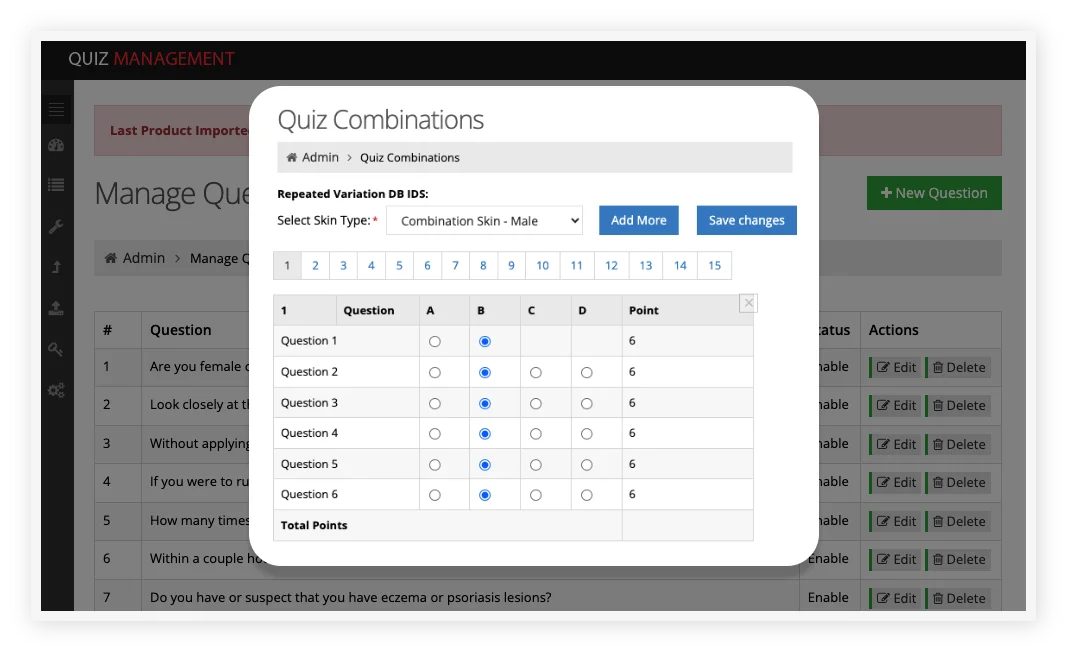
To circumvent Volusion’s rigid architecture, WebDesk Solution created an external microservice-a custom backend dashboard hosted on AWS with Node.js and Express.js. This dashboard became the nerve center for managing every aspect of the quiz. Administrators at Snowy Owl Cove could visually drag-and-drop question nodes, define branching logic based on user responses, and assign product tags to specific answer combinations. We implemented a granular access control layer, ensuring that only authorized team members could modify quiz logic. On the Volusion storefront, a lightweight JavaScript snippet continuously fetched quiz configurations via RESTful API calls, rendering the correct question based on previous answers. By decoupling quiz management from the Volusion environment, we ensured that Volusion’s platform constraints no longer hindered dynamic functionality. Real-time synchronization between the dashboard and the live site meant administrators could tweak questions or product mappings, and those changes would instantly appear for end users-no redeployments required. This approach bypassed Volusion’s limitations and let Snowy Owl Cove’s team manage the quiz from the dashboard.
We planned the integration between the microservice and the Volusion storefront through embedded JavaScript, to maintain data integrity, user privacy and fast response times.
Key deliverables:
- An external microservice hosted on AWS with Node.js and Express.js, running quiz management outside Volusion.
- A backend dashboard where administrators define branching logic and assign product tags to answer combinations.
- An access control layer so only authorized team members can modify quiz logic.
- A lightweight JavaScript snippet on the storefront that fetches quiz configurations through RESTful API calls.
- Result: quiz changes appear instantly for shoppers with no redeployments, and no third-party app was installed.
WebDesk Solution built a branching quiz that Snowy Owl Cove’s team can edit without code
Solution 02
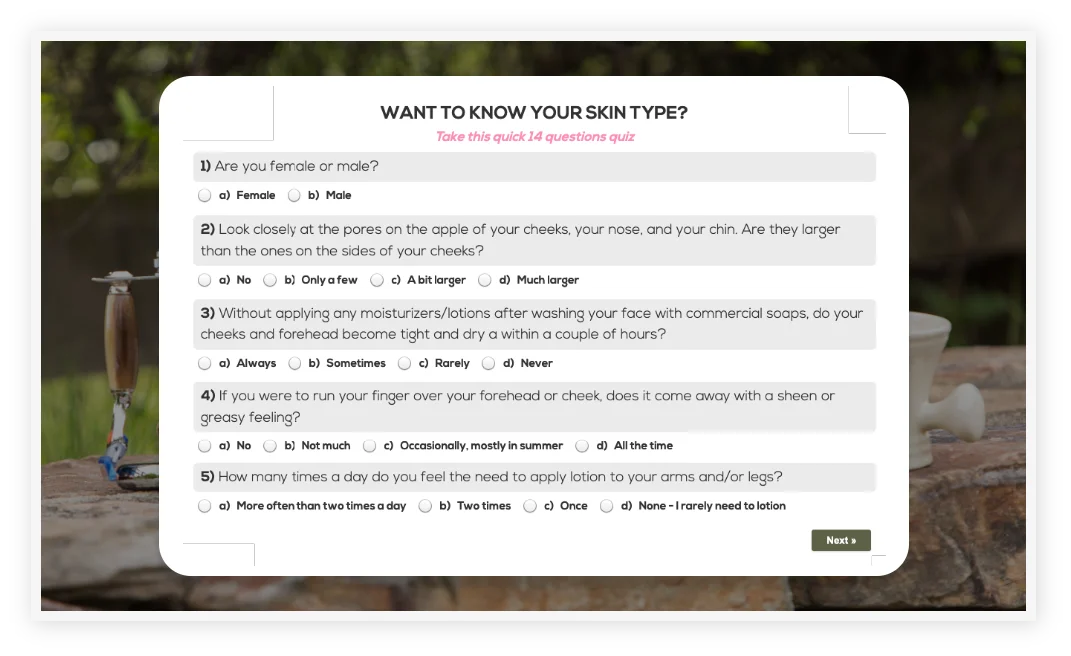
Accurate product recommendations depend on an intuitive diagnosis process, so we designed a customizable quiz interface. The backend dashboard featured a visual “Quiz Builder” module where administrators could input question text, possible responses, and create conditional branches (e.g., “If user selects ‘Oily,’ show next question about blemishes; if ‘Dry,’ ask about hydration needs”). Each response mapping included metadata fields-SKUs, product tags, and weighted scores-to feed into our recommendation engine. On the storefront, customers experienced a smooth, step-by-step quiz overlay. We optimized the UI for minimal latency (sub-200ms between question loads) and integrated micro-interactions-such as subtle animations and progress indicators-to keep users engaged. Error-handling logic gracefully managed incomplete inputs, guiding customers back on track. By leveraging our no-code dashboard, Snowy Owl Cove could add or remove questions, adjust branching priorities, and monitor quiz abandonment metrics. This implementation ensured that the quiz remained both comprehensive and adaptable-crucial for a skincare line that frequently introduces new products and evolves its offerings based on emerging industry trends.
Our backend stored, versioned and rendered the quiz structures in real time, and we mapped, tested and validated every possible branch before launch.
Key deliverables:
- A visual Quiz Builder module for entering question text, possible responses and conditional branches.
- Response mappings that carry SKUs, product tags and weighted scores into the recommendation engine.
- A step-by-step quiz overlay on the storefront with progress indicators, subtle animations and error handling for incomplete inputs.
- Dashboard controls to add or remove questions, adjust branching priorities and monitor quiz abandonment metrics.
- Result: Snowy Owl Cove’s marketing team updated quiz questions and branching logic weekly.
WebDesk Solution built an ecommerce product recommendation engine that learns from purchases
Solution 03
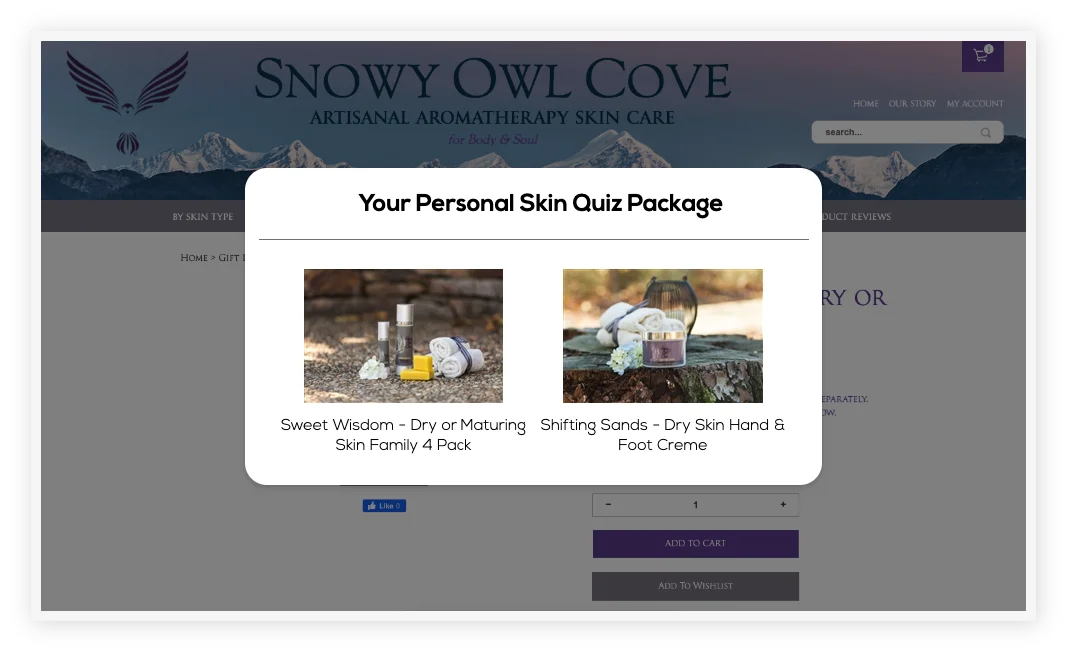
To deliver meaningful, personalized product suggestions, WebDesk Solution implemented an adaptive recommendation engine powered by Node.js and MongoDB. When a customer completed the quiz, their responses-translated into a weighted tag vector-were sent to our engine, which cross-referenced product associations stored in the database. Products were ranked based on match scores, inventory availability, and historical performance data (e.g., conversion rates for users with similar profiles). We also introduced a feedback mechanism: every time a recommended product was purchased, an event fired to Google Analytics, updating our performance dashboard. Backend workers processed these events nightly, recalculating weights and adjusting tag-product correlations. Over time, the engine “learned” which products resonated most with each skin profile. The loop kept recommendations aligned with the products customers actually bought. The result is a data-driven personalization engine that runs within Volusion’s environment.
We designed the MongoDB schema to hold evolving relationships between questions, tags and SKUs, and used Node.js scripts and background workers to process analytics. Snowy Owl Cove could tweak which products showed first and adjust the weight of attributes such as “fragrance preference” vs. “skin sensitivity.”
Key deliverables:
- A recommendation engine on Node.js and MongoDB that turns quiz answers into a weighted tag vector.
- Product ranking by match scores, inventory availability and historical performance data such as conversion rates for similar profiles.
- Google Analytics purchase events that update a performance dashboard.
- Nightly backend workers that recalculate weights and adjust tag-product correlations.
- Result: recommendations loaded in under 200ms, with no lag between quiz completion and product suggestions.
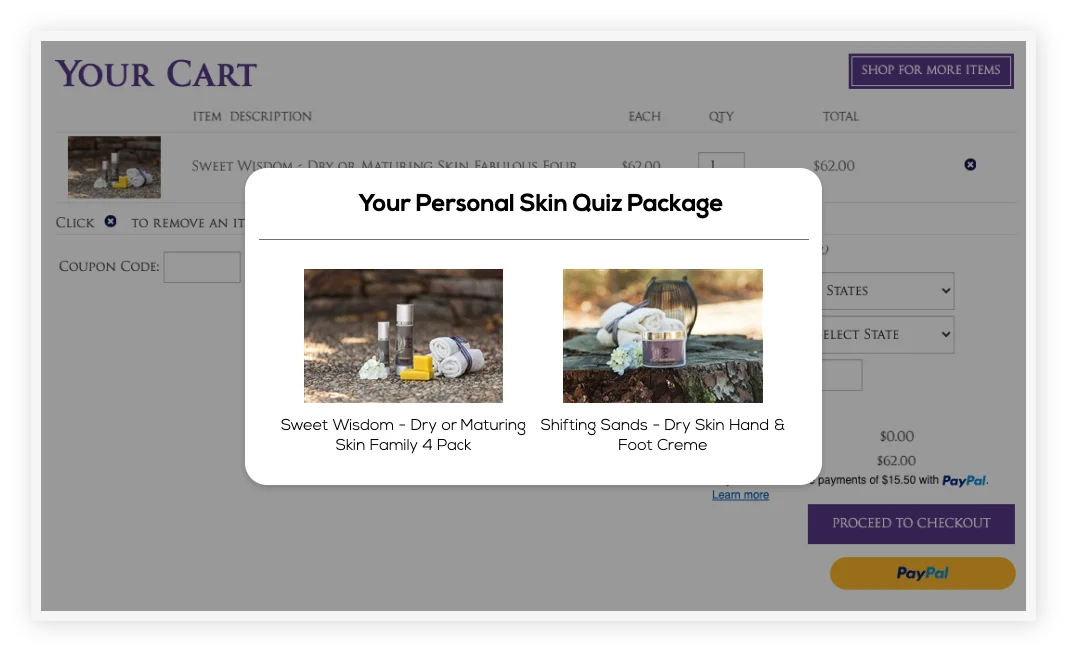
WebDesk Solution added a checkout upsell carousel to Volusion without apps or server-side changes
Solution 04
Given Volusion’s locked-down checkout process, WebDesk Solution devised a creative client-side injection strategy to surface related product recommendations at checkout. Administrators used our backend dashboard to flag products as “complementary” or “cross-sell” and assign display priorities. On the checkout page, a JavaScript snippet-loaded asynchronously to avoid blocking the native flow-called our API to fetch appropriate cross-sell SKUs based on the items in the customer’s cart. We styled the injected carousel to match Snowy Owl Cove’s branding, ensuring a native, seamless appearance. The snippet leveraged intersection observers and lazy-loading techniques to only render recommendations when the user scrolled near the bottom of the page, preserving performance. All API calls were secured with time-limited JWT tokens. By using client-side scripting instead of server-side modifications, we delivered the cross-sell carousel without compromising security or speed.
The snippet pulled its configuration data from our custom backend, dynamically injected the cross-sell carousel and maintained responsiveness on both desktop and mobile.
Key deliverables:
- A dashboard control for flagging products as complementary or cross-sell and assigning display priorities.
- A JavaScript snippet loaded asynchronously on the checkout page so the native flow is never blocked.
- A cross-sell carousel styled to match Snowy Owl Cove’s branding and rendered only near the bottom of the page.
- API calls to the custom backend secured with time-limited JWT tokens.
- Result: cross-sells appear at checkout without app installs, server-side changes or a blocked checkout flow.
Next Step
Need a custom build on a closed storefront?
Tell us what your Volusion store cannot do today. On a free consultation call we will review it and say whether an external service and a lightweight script can deliver it.
What results did Snowy Owl Cove’s quiz, recommendation engine and checkout cross-sell deliver?
Product Recommendation Quiz Development
After launch, the quiz saw a 42% completion rate, indicating heightened user interest.
Snowy Owl Cove’s marketing team updated quiz questions and branching logic weekly, responding to customer feedback and seasonal product launches.
Recommendation Engine Development
Real-time recommendations loaded in under 200ms, ensuring no lag between quiz completion and product suggestions.
Checkout Cross-Sell Development
The intelligent checkout carousel led to a 19% rise in Average Order Value (AOV).
Combined Results on Volusion
The introduction of the quiz and cross-sell integration contributed to a 27% lift in overall site conversion rate within the first 60 days.
Without migrating platforms or installing third-party apps, Snowy Owl Cove gained a fully dynamic eCommerce personalization engine on Volusion.
Conclusion
Snowy Owl Cove’s Volusion store could not run apps or deep customizations, so WebDesk Solution moved the dynamic work outside the platform. A Node.js and Express.js microservice on AWS managed the quiz, the recommendations and the checkout cross-sells, and lightweight JavaScript embedded in the storefront displayed them. The lesson: when a closed platform blocks a feature, an external service and a client-side script can deliver it without a platform migration. Snowy Owl Cove ended with a 42% quiz completion rate, a 27% lift in site conversion in the first 60 days and a 19% rise in average order value.
Questions About Snowy Owl Cove’s Volusion Quiz Build
Can Snowy Owl Cove run a custom quiz on Volusion without moving to another platform?
How does Snowy Owl Cove’s quiz fetch its questions from outside Volusion?
Can Snowy Owl Cove’s team edit the quiz without writing code?
How does Snowy Owl Cove’s quiz decide which products to recommend?
How did Snowy Owl Cove increase average order value without a checkout app?
What did Snowy Owl Cove’s quiz ask shoppers?
How was Snowy Owl Cove’s quiz tested before launch?
How does Snowy Owl Cove see which quiz recommendations led to purchases?