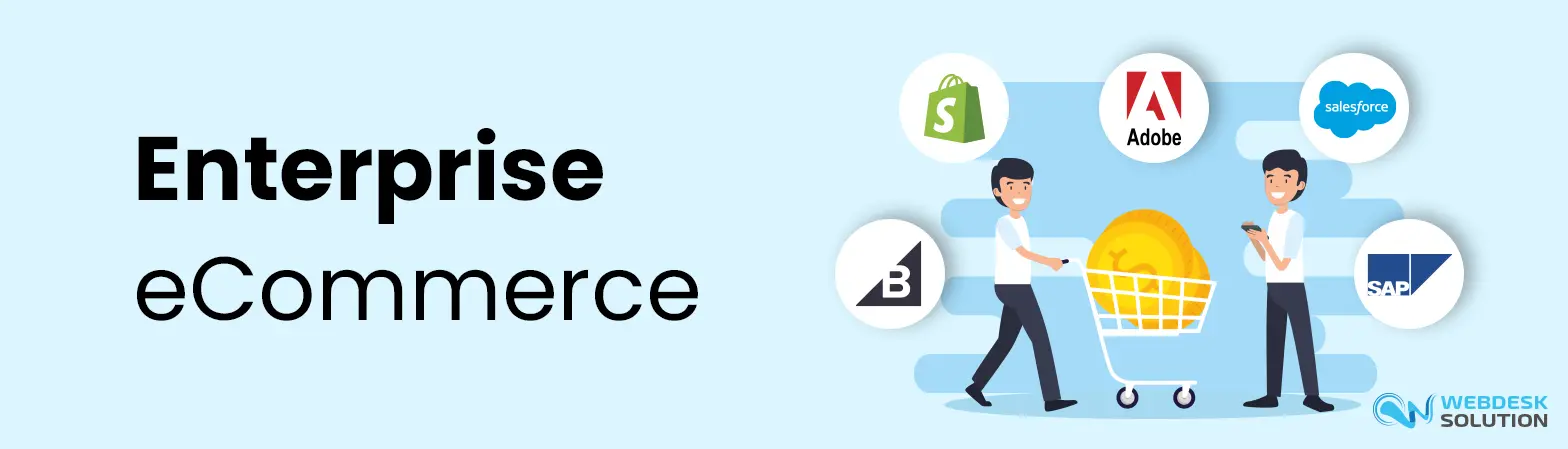
Does your online store need an upgrade to a better eCommerce platform? If your business has a revenue of seven to eight figures annually, it is time to migrate to an enterprise-level platform for your eCommerce store. When your online store has more buyers and visitors than before, your eCommerce platform must manage traffic and payments well.
As your business scales up, you should invest in an upgraded enterprise-level plan. Thankfully, there are some popular enterprise eCommerce platforms available in the market.
Due to this, it is challenging to decide on a suitable enterprise eCommerce platform for your business that is aligned with the latest eCommerce trends.
Enterprise eCommerce is a niche market where there is no one size fits all solution! Online retailers must thus carefully consider their platform options in light of their particular goals, financial requirements, and technological requirements. We’re here to help you navigate this decision-making process!
We’ll explore the eCommerce enterprise platforms types , their advantages, and even offer a carefully compiled list of the best enterprise eCommerce platforms in this blog. So continue reading to find the ideal match for your company!
So let’s get started.
An enterprise eCommerce platform is a comprehensive software solution designed to meet the complex needs of large businesses with high-volume sales and intricate operations. These platforms offer a robust infrastructure and a broad range of features that support the growth, scalability, and management of large-scale eCommerce operations.
When it comes to running a successful online business, choosing the right eCommerce platform is crucial. Enterprise eCommerce platforms offer a range of benefits that can help streamline operations, enhance customer experience, and drive growth. Let’s explore some of the top advantages of using these platforms.
Businesses have various options when it comes to enterprise eCommerce solutions. Understanding these types is crucial to making an informed choice that aligns with your business goals and operational needs.
SaaS solutions are cloud-based platforms with a subscription-based business model that give companies access to an eCommerce platform that is completely hosted and managed. These solutions are perfect for companies searching for a hassle-free option because they are scalable, affordable, and need little technical knowledge to set up and operate.

Moreover, SaaS enterprise eCommerce platforms include easy-to-use tools and an intuitive interface that simplify the setup and management of online storefronts for enterprises. With the many features and connectors that these platforms usually offer, businesses may tailor their eCommerce experience to match their unique requirements and goals.
SaaS eCommerce platforms provide companies the tools they need to improve operations and spur growth, from order processing and inventory management to marketing automation and customer relationship management (CRM). All things considered, SaaS corporate eCommerce systems are a great option for companies of all sizes since they provide a hassle-free and affordable way for them to create and run their online stores.
The frontend presentation layer and the backend commerce functions are separated by a headless corporate eCommerce platform. This architecture offers flexibility and scalability by enabling enterprises to deliver commerce experiences and content across several channels and devices independently.
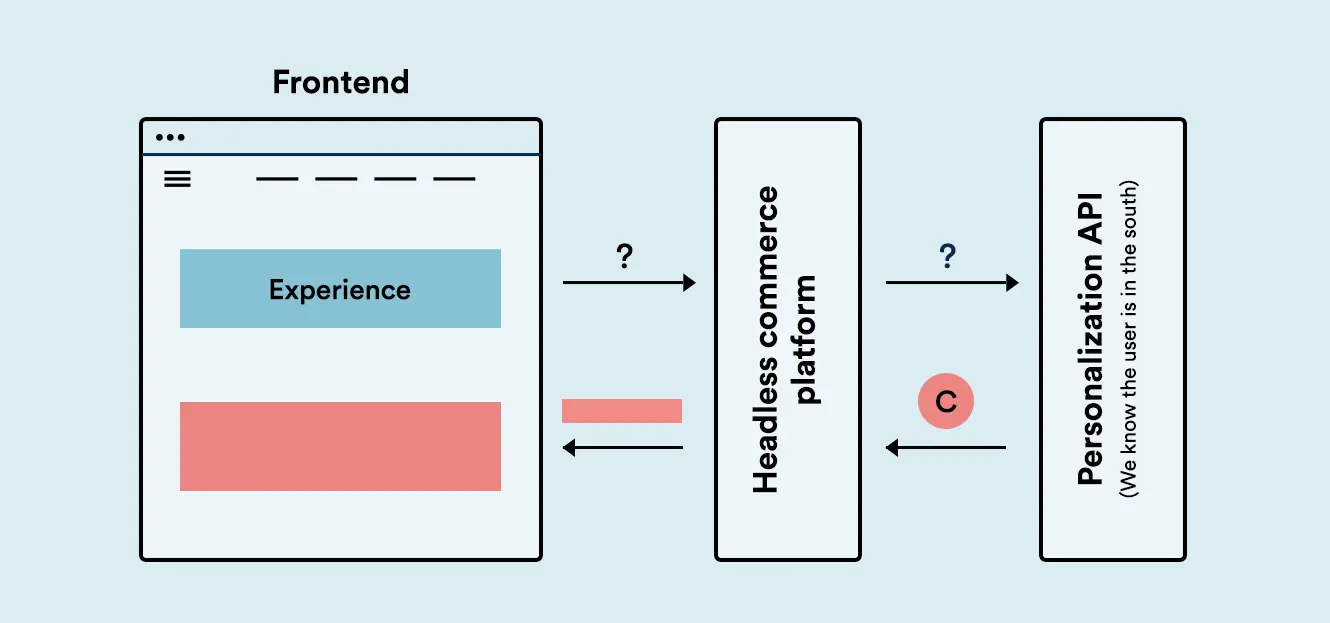
Businesses can quickly interact with third-party services and adjust to shifting client preferences using a headless approach without affecting the essential features of their core commerce operations. It is a cost-effective option and is therefore being adopted by many. To know more, check out the benefits of headless commerce.
The traditional method of tightly integrating backend commerce functions and frontend presentation layer into a single system is called an on-site enterprise eCommerce platform. Customers can navigate and transact with ease on this kind of platform, which provides a single and integrated experience. Businesses seeking a comprehensive, all-in-one solution that streamlines management and maintenance frequently choose on-site platforms.
An eCommerce solution that is hosted on cloud infrastructure and gives companies access to scalable and dependable computing resources is called a cloud eCommerce enterprise platform. Because of its accessibility, scalability, and flexibility, this kind of platform enables companies to quickly grow their operations and adjust to shifting market conditions.
Businesses can save money up front by using a cloud-based solution because they don’t have to buy gear or equipment for their premises. Furthermore, cloud eCommerce platforms frequently include automatic updates and integrated security features, allowing businesses to concentrate on expanding their online presence rather than worrying about managing and maintaining intricate IT infrastructure.
All things considered, a cloud eCommerce enterprise platform is the best option for companies searching for an affordable and scalable solution that can accelerate the growth of their eCommerce business.
It is one of the top enterprise ecommerce platforms that saves the files of your online store on the cloud and allows you to edit them. Here, you will get a lot of flexibility to edit the features of your website. This platform is costly in comparison to others because of the degree of flexibility it offers. If you can invest in an on-site team of developers, the platform is worth the money. How should you select an enterprise eCommerce platform for your business?
You must select an enterprise-level eCommerce platform for your business precisely as it is a long-term investment. Honestly, there is no perfect platform for your online store. However hard you try, you will have to make compromises.
A platform that is to be suitable for your demands may not be in your budget. A platform that is easier to use than others may not have advanced functionalities. Prioritize what you exactly need. Then, select a platform that provides most of them and is within your budget.
For large retailers aiming to scale their operations and meet the demands of modern eCommerce, choosing the right platform is essential. Below is a curated list of top enterprise eCommerce platforms, each offering unique capabilities to address diverse business needs:
If you’re unsure where to start when it comes to turning your website into a hub for selling your products, WebDesk Solution can help.
We’ve been in the industry for over 14+ years, and we know how to assist clients in building an eCommerce store that grows organic traffic and conversions and provides an excellent user experience.
Get a Free ConsultationIf you are happy with the regular plans of Shopify, you will be delighted with what it offers in the Shopify Plus plan. It is a fully hosted platform, so you need not worry about coding, bandwidth, or security. It allows 10,000 transactions per minute, reducing issues when you launch a new product in the store or host a killer sale.
Shopify Plus also supports the integration of over 1,500 apps, allowing businesses to manage everything from customer service to order fulfillment efficiently. While the upgrade costs approximately $2,300 per month, it’s a worthwhile investment for enterprise-level eCommerce businesses. For more details on the features, you can check out our blog on Shopify Plus features. It is worth it for an enterprise eCommerce business.
Pros
Cons
For businesses seeking clarity on whether Shopify Plus is the right fit, consulting a Shopify Plus development company can provide valuable insights and a free consultation.
Brands using Shopify Plus
Another platform on the list of the best ecommerce platform for big business is BigCommerce Enterprise. It can handle traffic spikes on your website while launching a sale or promotional offer. Its features, such as quote management, bulk pricing, and punch-out, make it an amazing fit for B2C and B2B eCommerce businesses.
The platform does not have fixed pricing for the Enterprise plan. The monthly cost typically depends on your online sales volume and specific business needs. For a detailed breakdown and what to expect, you can refer to this guide on BigCommerce pricing. On average, the Enterprise plan may cost around $1000 per month, but it’s best to request a custom quote based on your store’s requirements.
BigCommerce Enterprise offers advanced features for high-volume stores, but to fully leverage its potential, expert development is key. Our BigCommerce development services help you implement custom solutions, optimize store performance, and scale efficiently as your business grows.
Pros
Cons
Brands using BigCommerce Enterprise
Adobe acquired Magento, a large-scale eCommerce platform, in 2018 and later rebranded it as Adobe Commerce. It is a self-hosted solution that allows businesses to work with developers or build highly customized stores independently. The platform supports a wide range of third-party integrations, giving merchants strong control over design and functionality. Instead of offering traditional 24/7 customer support, Adobe Commerce relies on its developer community and certified partners for assistance.
Adobe Commerce is built with developers in mind and offers flexible, advanced features suited for complex business needs. The platform follows a custom pricing structure that varies based on business size and requirements, rather than a fixed monthly fee. Licensing costs do not include hosting, development, or domain expenses, which are handled separately.
In the end, if you want to create an enterprise-level eCommerce store using Magento, reach out to a Magento development company. They will understand your project requirements & provide a free quote.
Pros
Cons
Brands using Adobe Commerce
Salesforce Commerce covers mobile-first point-of-sale (POS) and predictive intelligence. It is the best ecommerce platform for big business that requires you to have more than five online stores to use it. It offers cloud-based customer relationship management (CRM) software. You can integrate any Salesforce software via CRM to build consistency across the business.
Salesforce Commerce Cloud is one of the best headless eCommerce platforms, and it’s a perfect solution for international brands. It has a single backend to manage multiple storefronts. You can use a different language and accept a currency on each of them. You get a 24-by-7 customer support team you can reach out to in case of any issues. It offers B2B as well as B2C pricing plans. The cost of the plan is according to your needs. You will be paying between 1 to 2 percent of your total sales.
Pros
Cons
Brands using Salesforce Commerce Cloud
SAP Commerce Cloud is an enterprise-level platform combining commerce capabilities with CRM functionality, giving businesses greater control over the customer experience. It is a suite of products designed to manage the entire customer journey across multiple touchpoints. As an omnichannel platform, it allows businesses to engage customers using data collected from online interactions, internal systems, external data sources, and in-store teams. SAP’s database brings together marketing, customer, sales, and service data in one place.
With its broad product ecosystem, SAP Commerce Cloud goes beyond standard eCommerce features. It supports customer service, sales operations, marketing activities, and customer data management under a single platform. It also integrates with tools like Salesforce to streamline automation. Pricing is offered on a custom basis, depending on business size, usage, and specific requirements.
Pros
Cons
Brands using SAP Hybris Commerce
The Oracle Commerce Cloud is one of the best ecommerce platforms for large business that is a cloud-based platform and offers a high level of flexibility and AI-powered functionalities.
Along with AI-based analytics, Oracle CX Commerce also supports multi-channel strategies. It supports multiple currencies and languages and enables you to personalize your content. A drag-and-drop builder on the platform allows you to easily customize the pre-built and responsive page layouts that it offers.
Pros
Cons
Brands using Oracle CX Commerce
A well-known CMS provider, Sitecore, created Sitecore Experience Commerce, a robust and powerful enterprise eCommerce platform. The solution combines Sitecore’s powerful content management and personalization features with advanced eCommerce features, enabling you to deliver truly personalized and engaging customer shopping experiences.
Sitecore Experience Commerce is popular for its ability to integrate with other enterprise systems to help you manage your customers, products, and orders in a single and unified view.
Pros:
Cons:
Brands using Sitecore Experience Commerce:
Squarespace Enterprise is a cloud-based eCommerce platform designed for large and growing businesses. It offers a range of advanced features and tools that make it one of the best enterprise eCommerce solutions available in the market today.
The key highlight of using Squarespace Enterprise is its ease of use. It’s a user-friendly platform that offers a drag-and-drop interface and doesn’t require high technical experience to set up a basic online store.
Pros:
Cons:
Brands using Squarespace Enterprise:
Spryker Cloud Commerce OS is an adaptable and modular enterprise eCommerce software, empowering businesses to create highly customizable online stores that meet business objectives easily.
Providing access to features for managing products, customers and sales channels while seamlessly integrating third-party services, the Spryker platform ensures reliability and scalability – an indispensable solution for modern eCommerce needs.
Pros:
Cons:
Brands using Spryker Cloud Commerce OS:
IBM WebSphere Commerce is an enterprise eCommerce software designed to assist businesses in creating and running online stores, with features for product catalog management, order processing, customer engagement management, and personalized marketing capabilities.
Businesses using WebSphere Commerce can ensure customers enjoy seamless shopping experiences across various digital channels.
Pros:
Cons:
Brands using Spryker Cloud Commerce OS:
When selecting an enterprise eCommerce platform for your business, it’s crucial to evaluate various factors to ensure the platform aligns with your unique needs and supports growth. Below are key factors to keep in mind when making your decision:
By thoroughly considering these factors and, where possible, testing different enterprise eCommerce platforms, you can ensure that your choice aligns with your business goals and provides the tools needed for growth and success.
There is no one-size-fits-all eCommerce platform for enterprises.
The best eCommerce platform for your business is one that integrates seamlessly with your existing systems, efficiently manages increased traffic, and minimizes downtime to ensure smooth operation.
eCommerce platforms are designed to help businesses scale quickly and serve their customers effectively. However, no single platform fits every business model. The ideal choice depends on factors such as your budget, the need for third-party integrations, essential features and functionalities, platform cost, and the level of performance required.
If you’re unsure about which enterprise eCommerce platform to choose, don’t hesitate to reach out to our experts.
WebDesk Solution offers comprehensive eCommerce development services. We specialize in helping businesses build robust eCommerce stores and thrive online. We take the time to understand your specific needs and deliver tailored solutions that drive success.
An enterprise eCommerce platform is a robust software solution tailored for large-scale businesses to manage their online sales and customer transactions. These platforms are designed for scalability, offering advanced customization options and a variety of features and integrations that help businesses handle large volumes of traffic, transactions, and product catalogs efficiently. The best enterprise eCommerce platforms are built to support growth and streamline business operations.
Choosing the right enterprise eCommerce software can be complex, as it involves multiple factors. Key aspects to evaluate include your business’s specific needs, the scalability of the platform, available integrations with your existing systems (like CRM or ERP), user experience, security features, customer support, and the overall cost of the platform. Carefully assessing these factors ensures that you select a platform that can accommodate future growth while meeting your business requirements.
Yes, it’s possible to switch from your current enterprise eCommerce platform to another. If your existing platform is no longer meeting your business needs, migration is an option worth considering. However, it’s important to assess the costs involved in migrating, such as data transfer, training, and integration with new systems. Partnering with an experienced eCommerce development company, like WebDesk Solution, can help you navigate the migration process smoothly and ensure minimal disruption to your operations.


No matter what stage you are in, we would love to talk to you about your project. No pressure, no obligation, just straight talk and helpful insight.

USA
98 CUTTER MILL RD STE 466, GREAT NECK, NY 11021

Canada
150 King Street W. STE 200
Toronto, ON M5H 1J9
All projects secured by NDA & IP is your's